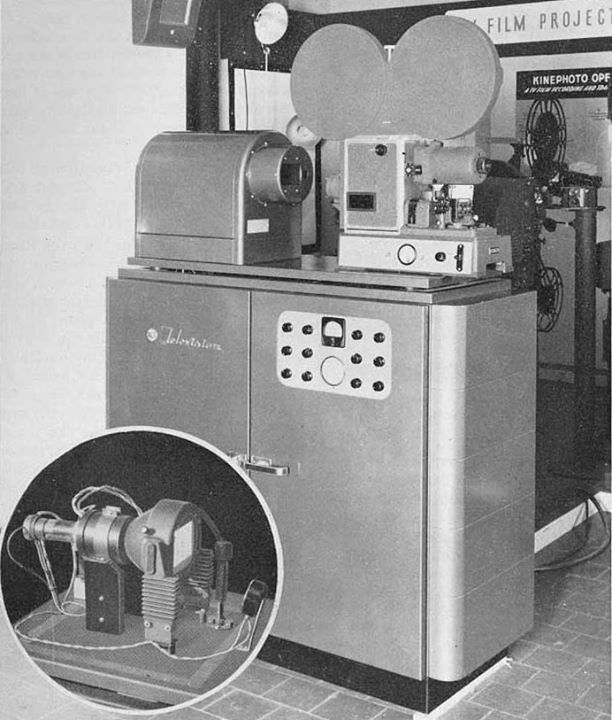
The RCA Kinescope Machine
September 13, 1947 — Kodak and NBC develop ‘kinescopes’, which use special film cameras to shoot directly off a TV screen. This permits the recording and later distribution of live shows for sale, or archiving.
The Kinescope dominated TV recording for time delay in the early 1950’s. A Kinescope recorder was basically a special 16mm or 35mm film camera mounted in a large box aimed at a high quality monochrome video monitor. All things considered the Kinescope made high quality and respectable TV recordings.
The Kinescope was quite the clever device. It’s film camera ran at a speed of 24 fps. Because the TV image repeated at 60 fields interlaced (30 fps) the film had to move intermittantly between video frames and then be rock steady during exposure. The pull-down period for the film frame was during the vertical interval of less than 2ms, which was something no mechanical contraption could do at the time. Several manufacturers like RCA, Acme, General Precision, and Eastman Kodak found various ways around the problem by creating a novel shutter system that used an extra six frames of the 30 frame video signal to move the film. This action integrated the video half-images into what seemed like smooth 24fps film pictures. Of course, the kines were played back on air using film chains running at 24fps so the conversion to film was complete and seamless. Until videotape recorders made their debut, the Kinescope was the only way to transmit delayed television programs that were produced live.

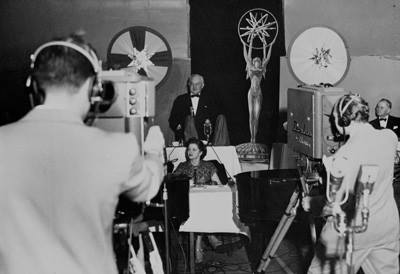
Although NBC erased the first ten years of The Tonight Show starring Johnny Carson, there are kisescope editions in the archives of Armed Forces Radio and Television, which recorded the show for the troops overseas.
NBC removed the last kine recorders around 1980. When I first worked in VTR maintenance in 1978, there was a kine record room next to our shop on the 5th floor of 30 Rock. Inside were three setups recording 16mm film from Sony Trinitron monitors. That’s right; kines were made in color! I was told they made those films for a couple of TV stations located on islands in the Pacific Ocean. Guam was one of them, I think. Once those islands went to videotape and satellite distribution, there was no longer a need for the NBC kine room.
Does Anyone Have A Kine Machine? Collectors?
Could anyone get access to those Tonight Show kines? That would be awesome
I managed the kine op for Rombex Productions way back when (now DuArt Video.) we modified our monitor to flip so we could record A or B wind negative…
Was a color Kinescope machine ever built or used? All of the color TV shows I have seen from the pre-video tape era, were filmed on black and white film, but why not a color kine machine?