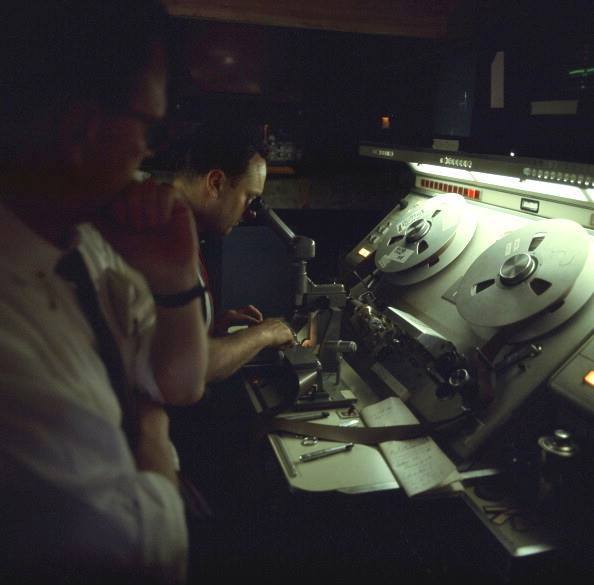
In The Beginning…There Was The Smith Block
Thanks to John Schipp, here’s a 1965 photo showing the Smith Block in action. The editor is thought to be Peter Groom and the location, NBC New York.
The first show known for extensive use of video tape editing was ‘Rowan And Martin’s Laugh In’, which debuted on NBC in January of 1968, but there was a pilot done in mid ’67. I have heard that it took six weeks to edit each episode, but on the bright side, a few new curse words were created in the process. They too were created by splicing. I think GDMF and MFSOB were the top two.
This was a devilish combination of art and science and very tricky business. If you want to know more about just how it was done, go to this link. Enjoy and share! -Bobby Ellerbee
http://www.videomaker.com/article/1221-edit-points-a-history-of-videotape-editing
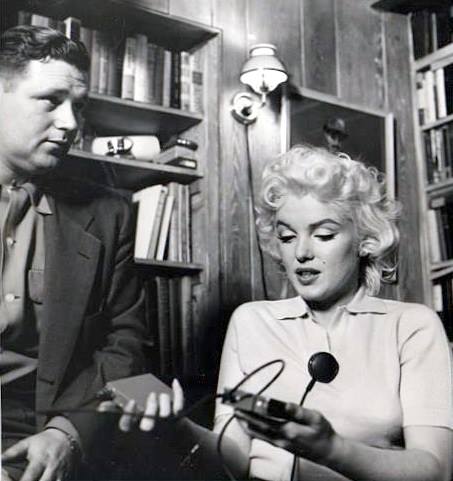
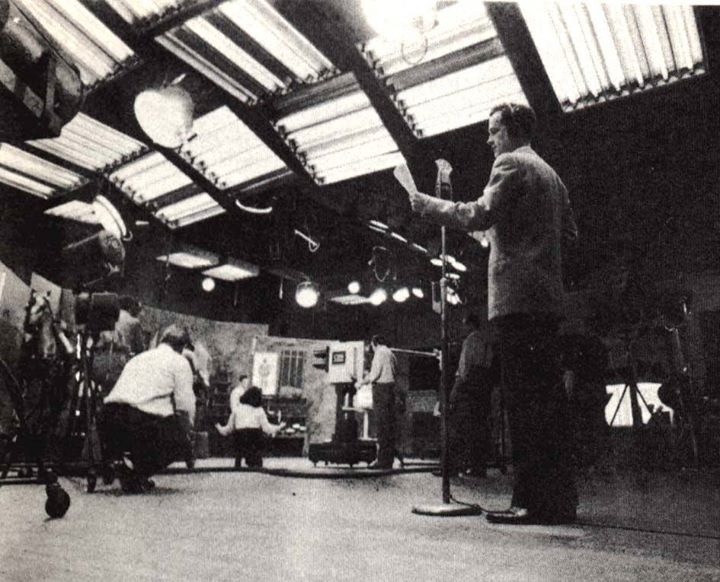
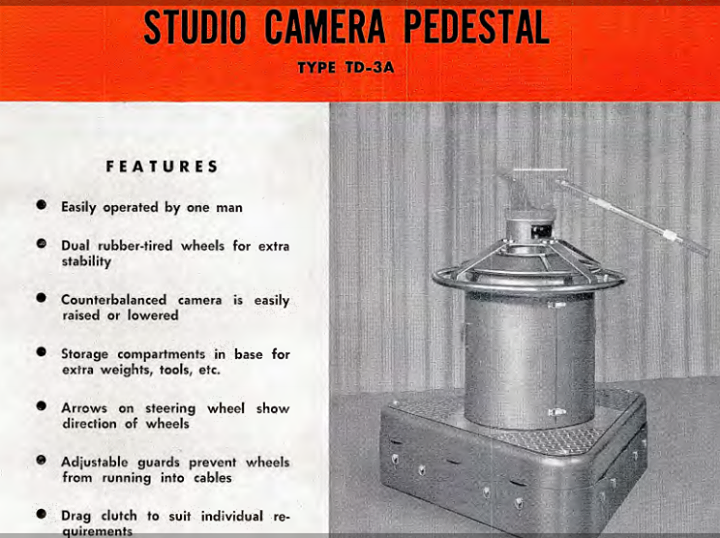
Here’s the Smith Block up close.
And they say it was because of that videotape editing that Laugh-In survived in an era where networks wiped and reused tape on an hourly basis, causing the loss of many of TV’s great moments.
That was NOT an easy process. I worked for a while at New Jersey Public Television in the 80’s. They had the splice block and other bits to do this kind of editing. I tried it a few times, and never made a successful edit. Thank goodness electronic editing was possible by then.
Then RCA came up with the T.E.P. Thumbwheel controls of two 2″ machines for editing, about 1970.
The only time I ever detested editing was splicing 1″ and 2″ videotape. Even 8mm film with its miniature images was easier.
I’ve had my hands on one of these, and done a few splices for the experience. WOW! I just missed this era by a few months.The VR1200B could do an insert edit to crystal black. Later, electronic assemble edits were even better! Long live Editec.
My first week at KTLA, back in the early 80’s I went into a cabinet and saw this device. I asked what it was, having never seen such a thing.
In his last few years, Ernie Kovacs’ shows were edited that way. Amazing what they were able to accomplish.
I used to edit 1/4″ audio tape. But I’m sure that doesn’t hold a candle to this.
Remember watching guys like Don Sinex tediously editing videotape at KTLA.
Probably one of the last shows to be edited this way was Captain Kangaroo. Here’s my photo of a CBS editor at the Broadcast Center in New York, cutting the show in 1978:
https://www.flickr.com/photos/dennisdegan/515337618/
On “Rowan and Martin’s Laugh” a 16mm black and white kinescope was edited first and then the color video tape was edited to conform to the kinescope edit.
I knew Peter Groom. He was one of the first editors I worked with at NBC Burbank. Unfortunately he passed away about 5 years ago.
Hats off to you guys who edited like that!
‘Coulda been me. I cut my teeth on TR70’s. Had to make a splice or two in my time. #EdiVue
what would they say about avid ???
I remember using one of these! Thankfully, the instances were when we were inserting a slide ID between edited segments, where a little burp in the sync didn’t matter. Not a simple task I’ll bet!
A friend has one of these.
Luckily, Edittec came along, so I only had to use one a few times.
I visited CBS New York in about 1981 and was told that the CBS Evening News with Walter Cronkite was still physically spliced. I don’t know where that fits in the timeline, but to me it was a bit of a shock.
Fantastic picture!
Here’s some shots of the Smith Splicer: https://www.facebook.com/media/set/?set=a.928585460502146.1073741854.123809690979731&type=1&ref=notif¬if_t=like
I used to cut audio tape this way. Was good at it but what a pain. I can only imagine 2″ tape. MFSOB GFDAMF CSMFTBB