- Home
- TV History
- Network Studios History
- Cameras
- Archives
- Viewseum
- About
Skip to content
Posts in Category: Archives
The Amazing Life Of Eddie Brinkmann…Sullivan Stage Manager
On January 27, 2014
- Archives, TV History
Here is a great, four page story that covers 20+ years of ‘The Ed Sullivan Show’ from the guy that was the stage manger for the whole run, BUT HIS PERSONAL ARCHIVES ARE HERE, SO USE THE SEARCH FEATURE AT THE TOP RIGHT OF THE PAGE TO FIND THEM ALL!
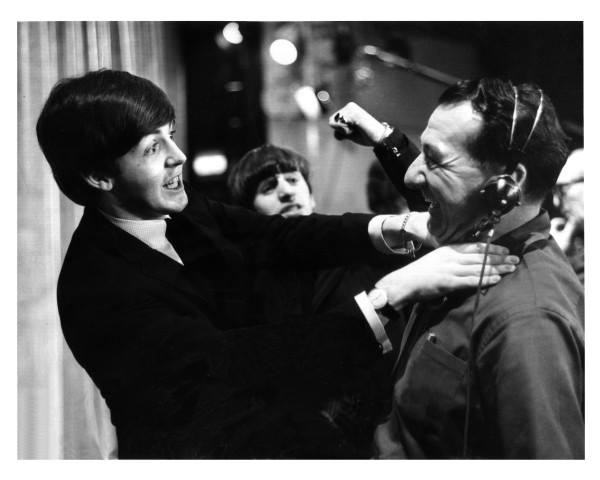
This is a one of a kind look behind the scenes of real television history as told by Eddie Brinkmann. Above, Brinkmann and McCartney playing around, letting of a little nervous energy before “the really big show”!
The First Camera Dolly, 1936
On January 20, 2014
- Archives, TV History
The First Camera Dolly, 1936
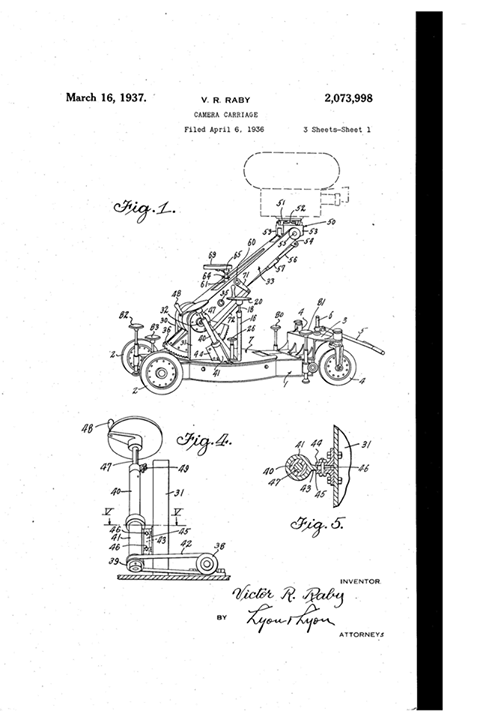
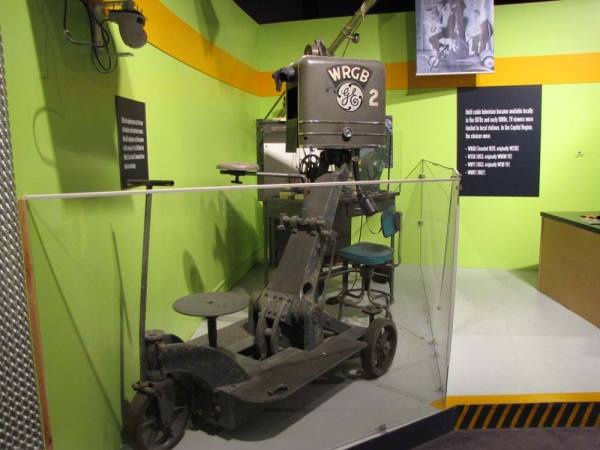
In the patent application, this is referred to as a “camera carriage” and as you can see, it has only three wheels. Designed by Victor Raby and made by Studio Equipment Company, these are now rare items and only a couple of these are still around. One of the survivors is shown below under a GE Iconoscope camera from WRGB and is located with the camera at the GE Museum in Schenectady NY. By early 1937, Fearless Camera Corp had introduced the four wheel Panoram dolly which was the preferred model. Television was still in the infancy stages so most customers were movie studios, but the WRGB crew has to be credited for being innovative.
The Cradle Head Patent
On January 19, 2014
- Archives, TV History
Necessity Is The Mother Of Invention…The Cradle Head Patent
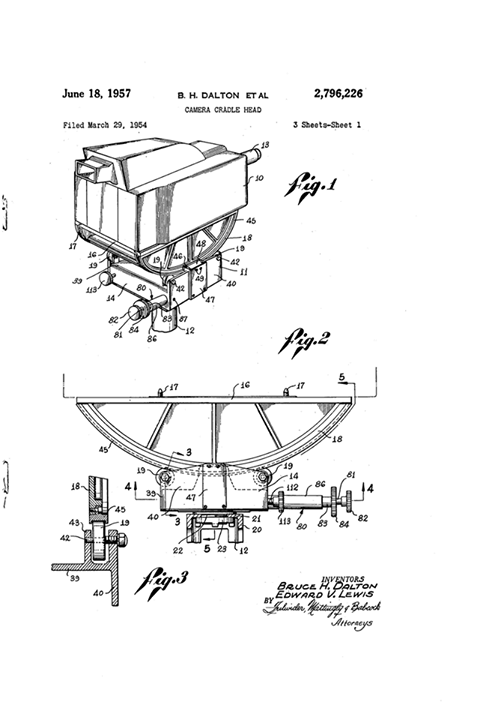
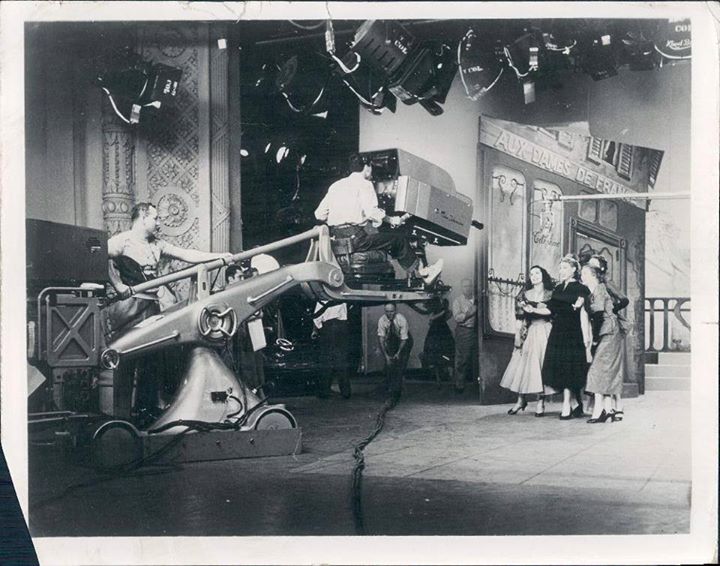
The Fearless Camera Company and RCA had a good thing going… Fearless (later, Houston Fearless) built the support equipment and RCA’s built the cameras and distributed for Fearless. As you can see in the photo on the right, the first experimental TK40 color cameras used the Fearless friction type pan head. The camera was just to heavy for it though, so Bruce Dalton (one of the creators of the TD 1 pedestal) and Edward Lewis came up with the now famous Cradle Head design. Although RCA built 239 TK40/41s, only 215 of these wide bodied cradle heads were made and distributed with the cameras as of 1964, when regular production stopped. In 1966, 24 more were made and all were shipped with the new Houston Fearless Cam style pan heads which you see under most of ABC’s TK41s as they bought 12 of the last 24 made. By late in 54 there was also a narrower cradle head available that fit under RCA’s black and white cameras like the TK11/31. The photo on the right shows one of the first production models of the TK40 being tested at the Colonial Theater.
The Fearless Camera Pedestal Patent
On January 17, 2014
- Archives, TV History
The Fearless Camera Pedestal
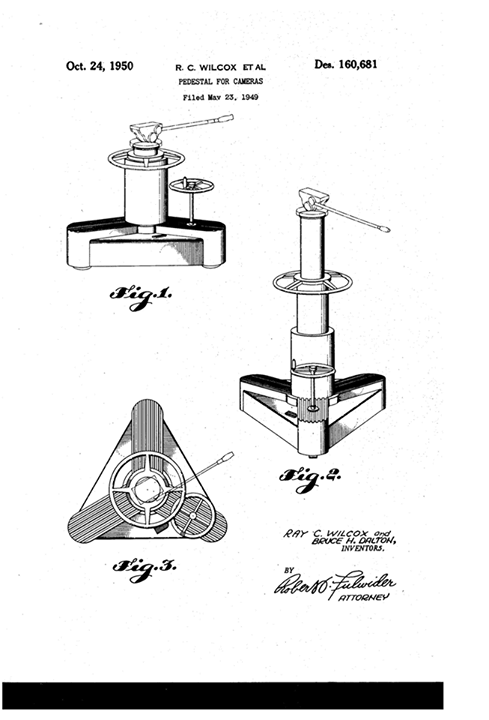
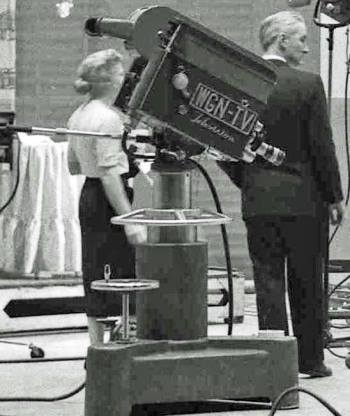
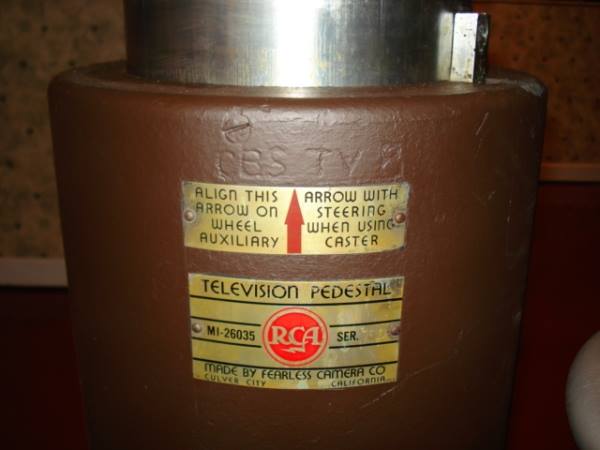
May 23, 1949 Ray Wilcox and Bruce Dalton submitted their patent application for television’s second ever camera pedestal, but the first to use the now standard center steering ring. The patent was assigned to their employer, the Fearless Camera Company in Culver City, CA. The up and down action for the column was achieved by turning the base mounted crank wheel. This quickly became the industry standard and was known by it’s model number, the TD 1. RCA was the distributor.
Television’s First Camera Pedestal…November 1936
On January 16, 2014
- Archives, TV History
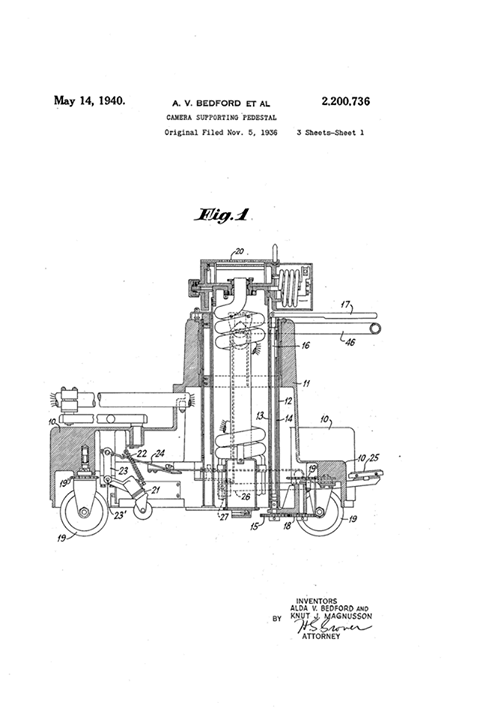
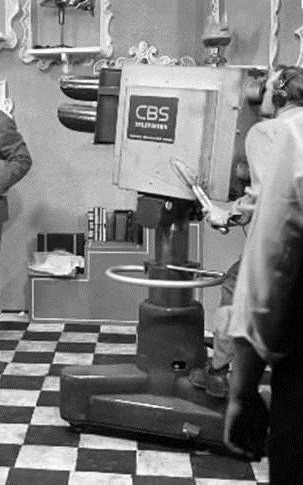
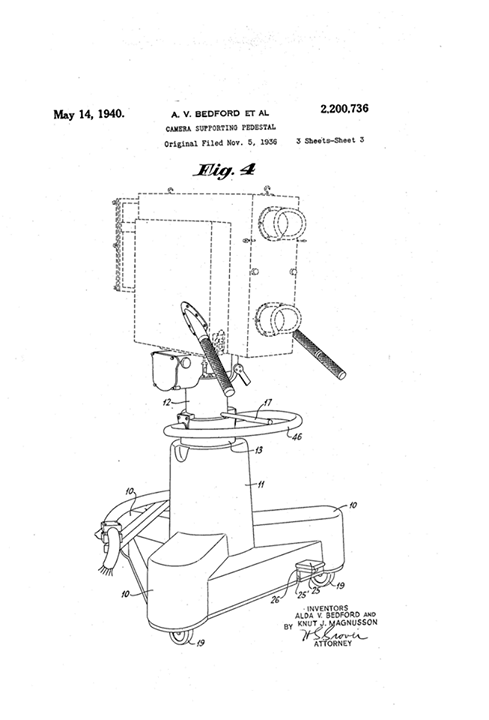
Designed by Alda V Bedford and Knut J Magnusson, the patent assignment went to RCA which I think was their employer. It was a surprise to me that the lifting column is powered by an electric motor located in the base, and the up and down action is controlled in the left panhandle of the camera.
Another interesting feature is the internalization of the camera cable which as you can see in the drawing on the right, fits inside the column and is threaded to the bottom center of the camera, passing through the pan head. Unlike today’s peds, there is no steering ring. The ring you see is for pushing and pulling only. If you look closely at the schematic on the right (17) you can see a lever on top of the ring…that is what sets the wheel direction.
This ped has crab steering only and the foot pedal on the base is for a forth castor wheel that comes down so the pedestal can pivot to change the base position under the camera. The Fearless TD 1 pedestal developed in 1949 had this castor wheel also but added the steering ring and a manual up and down column. That comes tomorrow.
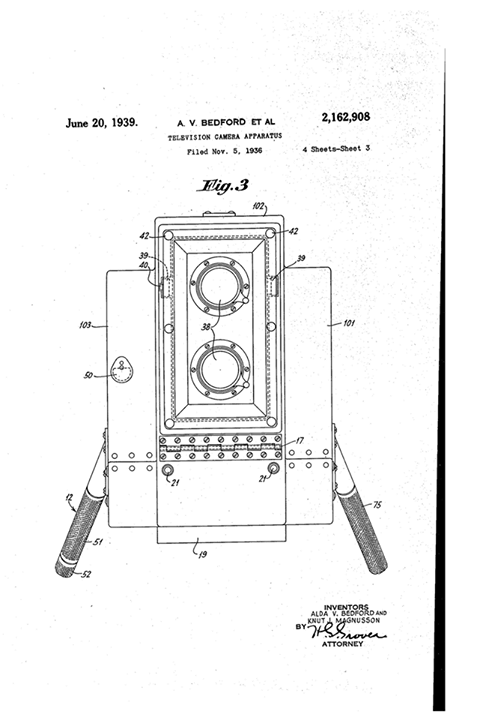
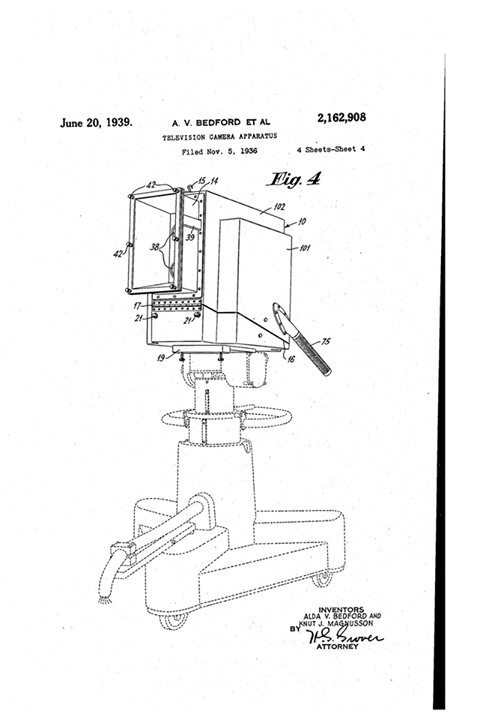
The 1937 RCA Iconoscope Camera, Patent Diagrams
On January 15, 2014
- Archives, TV History
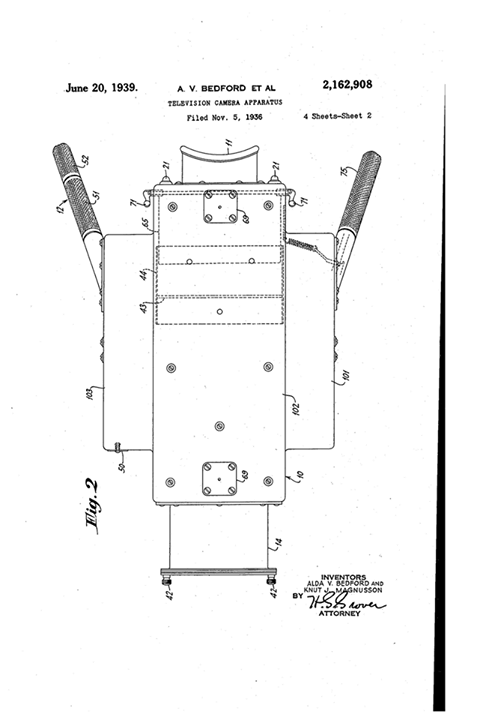
The interior view in the previous post is the most revealing of the four images, but these are also interesting. On the left, we have the view from the top, with 12 showing the focus control portion of the right rear pan handle and 21 denoting the red and green tally lights on the back. The center image shows the camera from the front with dual red and green tally lights below the lens box with red meaning on air and green meaning stand by mode. The image on the right shows the camera mounted on television’s first pedestal which will be featured tomorrow.
The 1942 GE Iconoscope Camera…Rear View
On January 14, 2014
- Archives, TV History
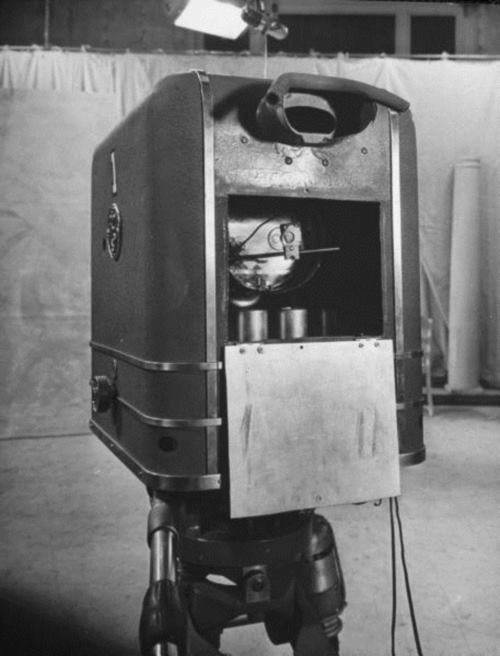
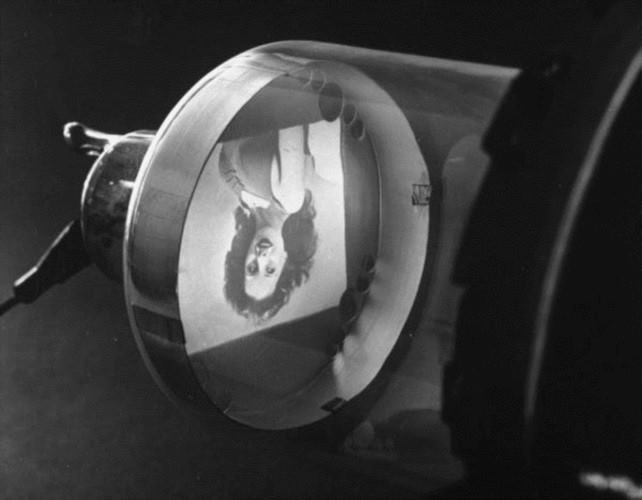
On the back side, things are a little crude on the outside, but inside…state of the art. That pitiful looking viewfinder allows the operator to see an optical image on a ground glass screen. Like the image on the Iconoscope tube (right), it is also inverted and backward meaning panning left with the camera would make the image center move to the right, tilting up would make the image center move down, and so on. On the left, you can see the rear of the Iconoscope tube but the image shown on the right could not be seen from there as the receiving surface faced the lens on the front of the camera.
The 1943 GE Iconoscope Camera…Front View
On January 14, 2014
- Archives, TV History
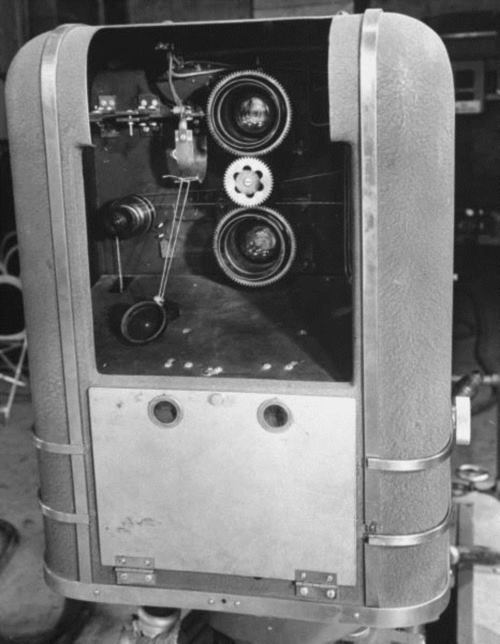
From the front, this camera and the RCA Iconoscope are quite different, yet have one thing in common. On the left is a close up of the dual lenses with the top lens feeding the optical viewfinder and the bottom lens feeding the Iconoscope tube…that is what they have in common. The big difference is that the RCA cameras could change lens sets and the GE cameras can not as they were made with what look like 90mm pairs that are permanently installed. The GE lenses are recessed and internal where the RCA lenses were front mounted and had quick change clasps for different lens sets.
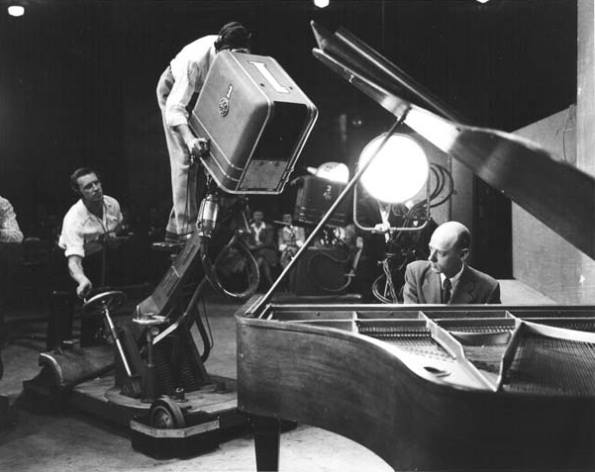
A True Rarity! RCA’s First Image Orthicon Prototype Camera
On January 12, 2014
- Archives, TV History
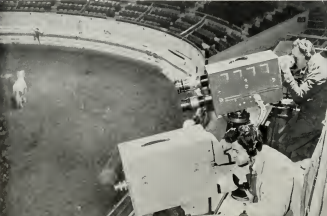
This amazing photo is from October 1945…12 months before the introduction of the RCA TK30. The camera at the bottom has an experimental Image Orthicon tube in it and is being compared to RCA’s Orthicon camera. WWII ended September 1945 and as a treat, a rodeo was staged Madison Square Gardens by RCA for the wounded veterans from local VA hospitals, but the event doubled as a testing ground. The demonstration was viewed on monitors by reporters in a separate room. At the end of the show, the house lights went down and 48 “cowgirls” (one for each state) entered the arena with candles in their hands and formed an outline of the US. The glow of the candles could be clearly seen via the IO camera, but there was almost nothing from the other camera. Notice the single lens and the “new” periscope viewfinder hood on the IO camera…that makes this the first RCA camera with an electronic viewfinder. The Orthicon camera on top is using a dual lens optical viewfinder. Dumont had electronic viewfinders from the start…wonder why it took RCA so long to come around? The Image Orthicon had actually been developed a year or so before this, but was classified as secret and only the military had access and knowledge of the tube. It was only grudgingly that the government gave in to broadcasters who clamored for the new technology. The first RCA TK30s actually went to the US Army several months before NBC got theirs in June of 1946. Commercial distribution of the TK30 started in October 1946 and the RCA TK10 IO Studio Camera debuted in December 1946.
‘I’ve Got A Secret’ November 1959…
On January 11, 2014
- Archives, TV History
‘I’ve Got A Secret’ November 1959…
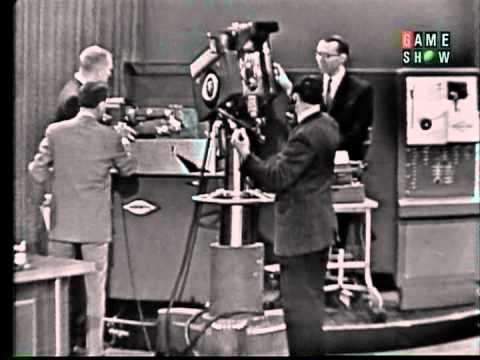
At the 6 minute mark, Garry Moore call in cameraman Cass Gaylord to get close ups of the first Optical Character Reader which was invented by David Shepard. There are several shots of the RCA TK30 in the clip and the demonstration is interesting too.
http://www.youtube.com/watch?v=v2HM1DvQUdk
Inventor David Shepard appears on a 1959 episode of “I’ve Got a Secret” with the secret “I invented a machine that read and writes.” Mr. Shepard is considere…
America’s First African American Television Star…Ethyl Waters
On January 8, 2014
- Archives, TV History
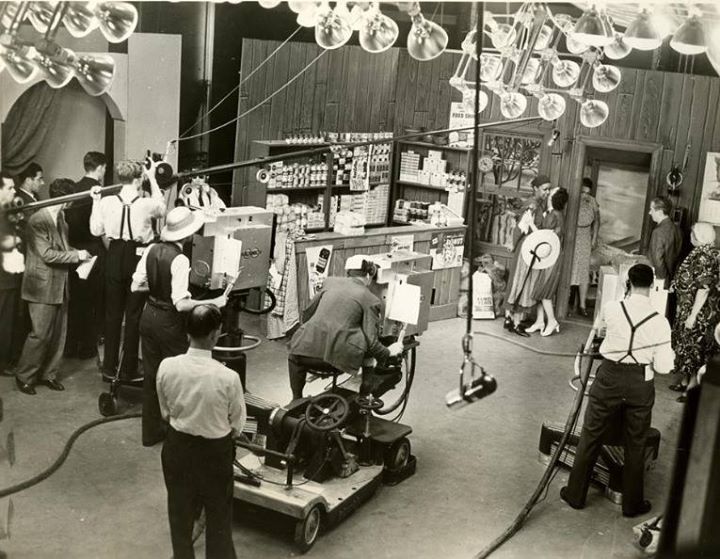
As early as 1919, Ethyl Waters had been appearing in roles on Broadway and in 1926 recorded “Dinah” which was the first international hit by a black singer. In 1933, she became the first person to ever sing and record “Stormy Weather” as the star of the Broadway show by the same name. By the late ’30s, she became the first African American to have equal billing with white stars. In 1939, while she was starring on Broadway in ‘Mamba’s Daughters’, NBC’s experimental station in NY produced a one hour version of the show and did it live from Studio 3H. A few months later, NBC
gave her a summer series called ‘The Ethyl Waters Show’. The bigger television break came in 1950 when ABC created ‘Beulah’ with Waters as the star. The show ran two seasons and ended when Waters left the show. Below is a very rare shot from NBC Studio 3H showing Waters on the ‘Mamba’s Daughters’ set and RCA 500A Iconoscope cameras. The lighting was so intense that one cameraman has on a pith helmet and the one in the middle has a cloth apron over his viewfinder and head to help him see the image. These silver 500A camera scanned 441 lines of resolution, which is double the 220 lines scanned by their dark colored predecessors.
“Sullivan’s Cameraman” George Moses
On January 5, 2014
- Archives, TV History
Like Red Skelton and others, Sullivan was enamored with the way he looked on television. In his early days, he would try different wardrobes, make up and hair dressings to see which ones made him look best (a tall job), but he found that somehow a cameraman on his Studio 50 crew named George Moses made him look best. From that point on, he was the only cameraman allowed to shoot the close ups and introductions Sullivan did. Moses was a permanent fixture on Camera 1 from the ‘Toast Of The Town’ days till the last show on March 28, 1971. I don’t know the whole story, but Moses was also involved with the first US/Europe satellite broadcast via Telstar and was shooting either Walter Cronkite or The Statue Of Liberty in NYC, or President Kennedy in Washington on July 23, 1963.
The Great Ones…Jackie Gleason And Pat McBride
On January 5, 2014
- Archives, TV History
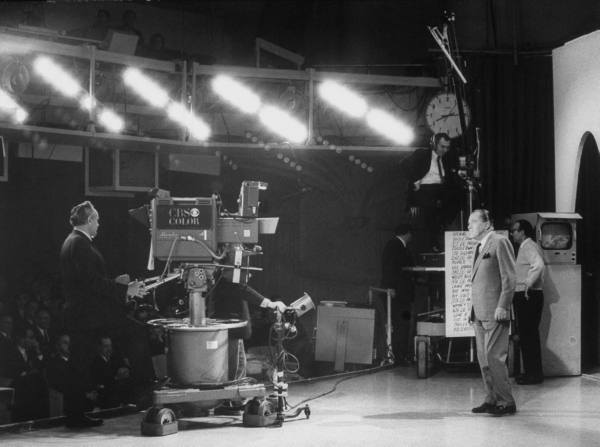
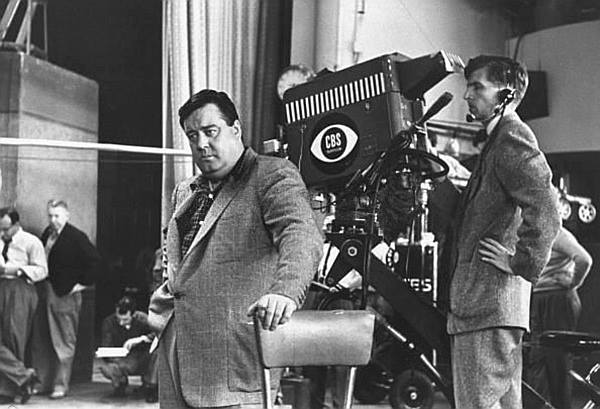
It would be extremely interesting to hear the stories Dennis Patrick McBride could tell about his 40 plus years at CBS behind their cameras. This photo was taken in February of 1955 at a rehearsal of ‘The Jackie Gleason Show’ at CBS Studio 50, better known as The Ed Sullivan Theater. Pat worked on the Sullivan show as well as lots of CBS Sports broadcasts and became one of their top sports cameramen. In 1966, he was described in an article as CBS’s longest working cameraman. I think he joined CBS just after WW II and stayed on the job till sometime in the 80s. While shooting Barbara Streisand’s first television special on location in Boston with 3 of the new Marconi Mark VII color cameras, two of them went out and with Pat’s help and deep experience, he made the taping work and got shots no one thought you could get with only one camera. This decorated veteran of WW II and Emmy Award winning television pioneer passed in 2004.
1954 Rose Parade…First West To East Color Broadcast
On January 1, 2014
- Archives, TV History
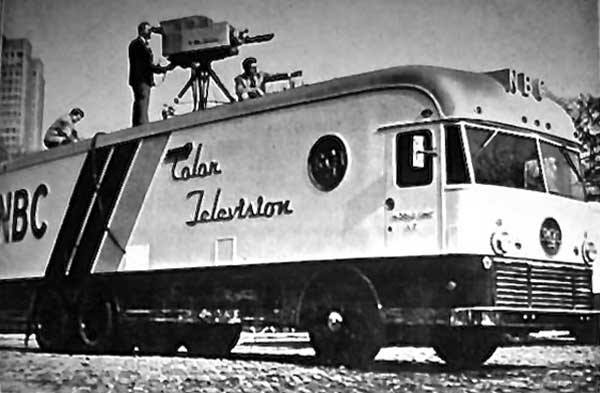
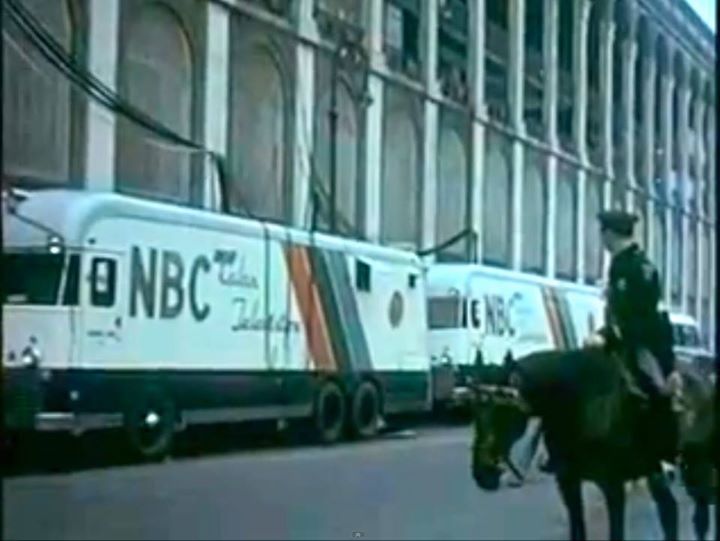
January 1, 1954 marked several color television “firsts”…it was the first time the new NBC color trucks were used. It was the first west to east color broadcast to be nationally televised and of course, it was the first color broadcast of The Rose Parade. The two new color remote trucks were ready in December of ’53 and each truck had two RCA TK40s, which were borrowed from the Colonial Theater in NYC and were returned after the California trip. Within two weeks, 4 TK41s were installed. This is an NBC/RCA publicity photo but it is not known where this picture was taken.
September 17, 1955…First College Football Colorcast
On December 30, 2013
- Archives, TV History
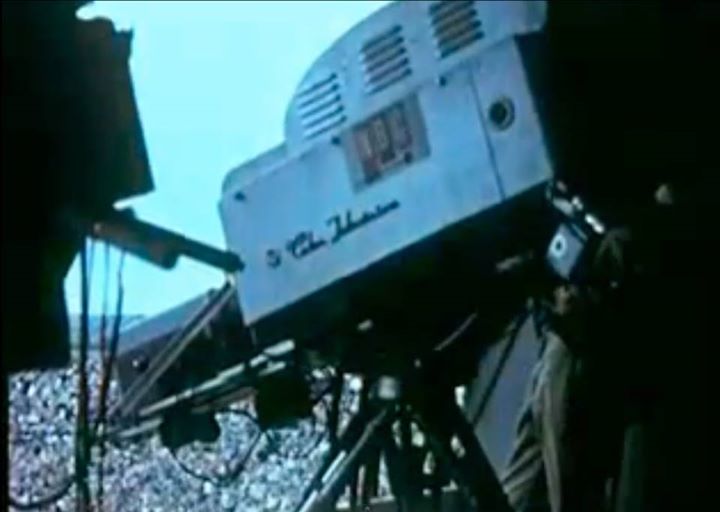
The first NBC color coverage of a college football game was in Atlanta when Georgia Tech Yellowjackets played the Miami Hurricanes, September 17, 1955 at Grant Field. Not long after that, NBC went to Ann Arbor’s “Big House” for a Wolverine game. In the great video below showcasing RCA color and the first commercially available color camera, the RCA TK41, there is about 30 seconds of the Michigan game at the end of the clip.
In that there weren’t many color sets till the mid 60s, why did they do all this color production? For two reasons…first, every color event taught both RCA and NBC how to do better color work and constant upgrading and modifications were being made to enhance the image on black and white sets. Second, the more color shows offered, the better chance to interest customers in a new RCA color set.
Below is a 4 minute clip showing the great RCA TK41s in service, including the football remote.
December 1950…The Debut Of The Sanner Crane
On December 29, 2013
- Archives, TV History
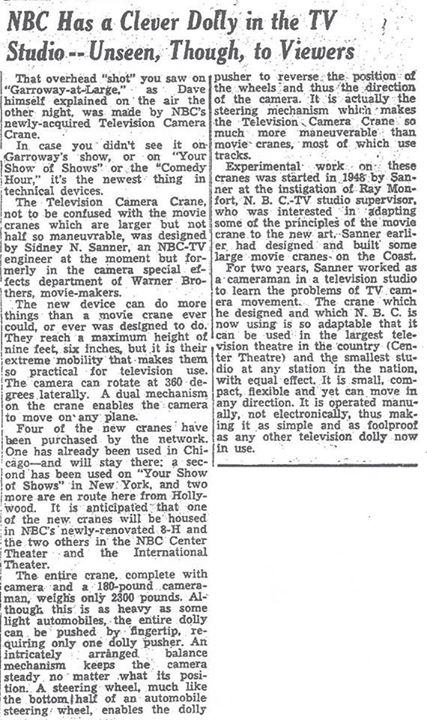
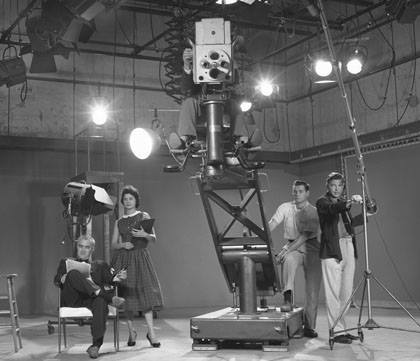
Thanks to Maureen Carney, we have an article that introduces and dates the Sanner Studio Crane. The innovation started in 1948 when former Warner Brothers employee Sidney Sanner got behind an NBC camera for two years to learn the needs of the operator. NBC bought the first four with one going to Chicago, one to Studio 8H, one to The Center Theater and one to The International Theater. CBS bought some too, and they were fine for black and white cameras, but when the TK40s came along a few years later, the Houston Fearless 30B Studio Crane took over. The Sanner in in the middle and the 30B on the right. The article is very rich in detail.
First Episode ‘I Love Lucy’ Shooting Schedule
On December 18, 2013
- Archives, TV History
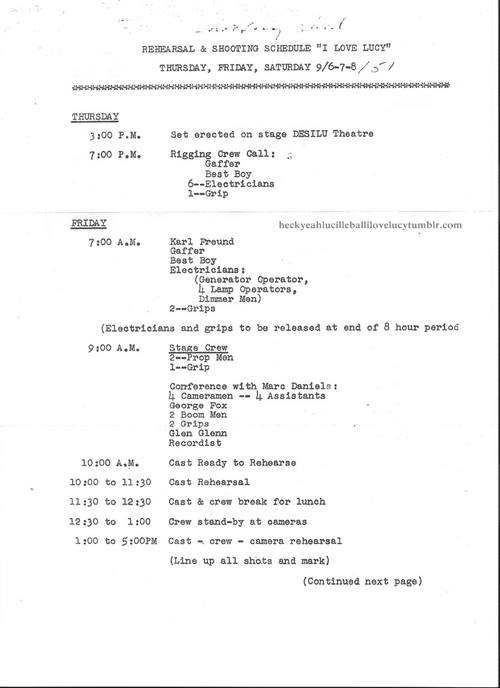
Although this episode was the 4th to air in season 1, it was actually the first regular episode ever shot. Posted here is the first of the two page schedule with the second page below in Comments. Rehearsals stared on Thursday and the show was filmed at 8PM on September 8, 1951. The show title is “Lucy Thinks Ricky Is Trying To Murder Her”. Here’s a snippet from that episode.
A Rare Piece Of Equipment..The ‘Cinimobile’…
On December 18, 2013
- Archives, TV History
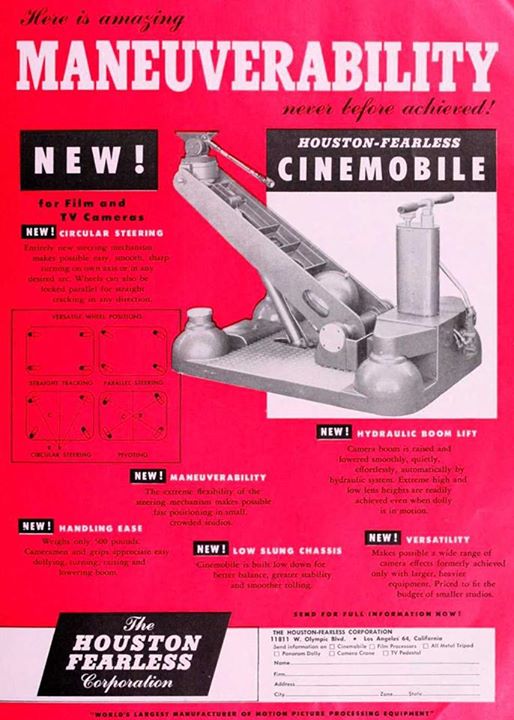
This is an ad for the Houston Fearless ‘Cinimobile’ hydraulic dolly. Last week I posted a photo of one of the few that are still around…I think there’s one in Ohio and one in Germany. This is probably an item introduced in the late 60s for film and television. There’s another photo from the users manual below in the Comments section.
Cinema’s First Known Zoom Lens Shot…
On October 29, 2013
- Archives, TV History
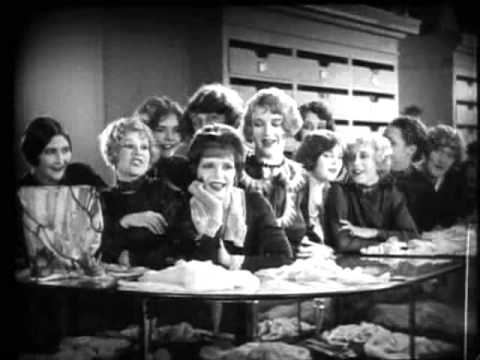
In this clip, starting at 2:00, we see what is thought to be the first ever use of the zoom lens in a cinematic presentation. The film is ‘It‘, starring “The It Girl”, Clara Bow. “It” by the way is “that special something, a unique sparkle of personality and looks that command attention”. The zoom lens was not new when it first made its cinema appearance in 1927. It had been described many decades before and an example was even patented in 1902.
For cinema of the time, it wasn’t an ideal solution, as the cameraman had no way of seeing exactly what he was shooting while in the act of shooting it (true reflex finders didn’t arrive in cine cameras until the Arriflex). One advantage is it needed to only be focused once, and the lens would stay in focus throughout the shot. So, it had uses even in its original form for cinema and was developed and patented by more than one person. Now, the optical elements of a zoom could not be patented outside any novel lens formula, but the mechanism used to zoom could be and was.
The first major patent applied for came from Rolla T. Flora in early 1927 and was granted patent #1,790,232 in January 1931. This was what was used in the ‘It’ movie and was known as the Paramount zoom, and was the earliest cine zoom used. Another was Joseph Walker’s zoom (#1,898,471 applied for September 1929 and granted March 1933). From a profile on Walker, he had been working on a practical zoom for years, but there is no evidence of a useful patent emerging from his work before this, and no evidence this mechanism itself was then useful. He later built what became the RCA Electrazoom for television.
In the years from 1927 until 1932, the zoom lens was essentially exclusive to Paramount. It was used immediately: In the first shot of the 1927 film ‘It’, when establishing the store setting. After the Waltham’s sign is shown, the camera tilts down then zooms to the bustling sidewalk storefront.
In early 1932, a commercially available zoom began to be sold by Bell and Howell. This was known as the B&H/Cooke Varo. Initially it was made to order but later was available as stock. The lens was said to have been acquired by all the major studios and by the government. The lens was also available as a rental to any reputable producer, so it may have found its way to independent producers or a small studio like Monogram. Thanks to Jack Hirschorn for his help with this post.
ULTRA RARE EXCLUSIVE! View From Behind Walter Cronkite’s Desk!
On September 20, 2013
- Archives, TV History
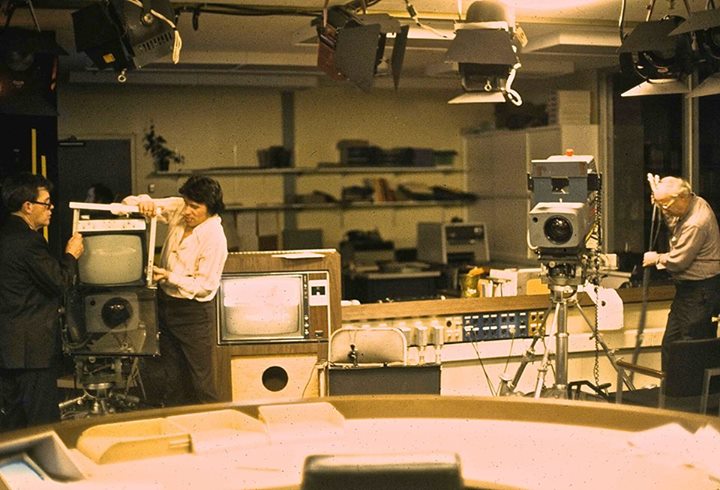
If you have ever wondered what Walter Cronkite saw from his desk, wonder no more. Thanks to Glenn Mack, here is a shot from behind that famous desk in the newsroom at the CBS Broadcast Center from around 1974. It appears that the two Norelco PC70s are in the process of having their teleprompters changed to newer models. It looks like both cameras are mounted on height adjustable tripods that were usually found only on movie sets, perhaps made by Movieola. Anyone know?