CinemaScope
CinemaScope
If Cinerama was the star that guided the film industry into wide screen presentations, CinemaScope was the rudder that steered the course.
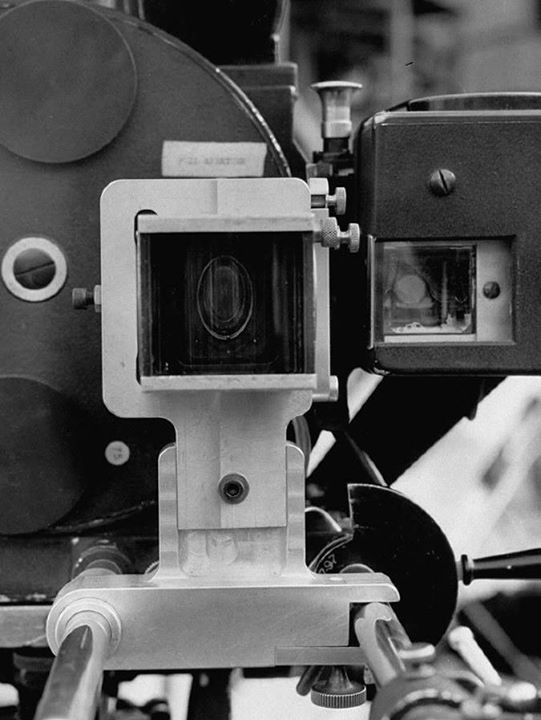
If you look closely at the photo below, you can see the essence of CinemaScope. See the long oval in the camera lens? That is the CinemaScope anamorphic lens used to photograph ‘The Robe’. It’s all in the lens…the anamorphic lens!
Ana means ‘re’ and morph means ‘shape’ so the lens reshapes the image. In the case of the motion picture, anamorphic lenses squeeze a wide image onto a narrow film frame. Projection through a similar anamorphic lens displays the image on the screen in its full, undistorted, width.
Anamorphic lenses are referred to by their compression (or expansion, in the case of projection optics) ratio. A 2:1 lens squeezes into the film frame an image 100% wider than a normal lens. A 1.5:1 squeezes in an image that is 50% wider, a 1.33:1 squeezes the image by 33%, etc. Most 35mm anamorphic films are made to be projected with 2:1 lenses.
For the indepth story and history of CinemaScope, I refer you once again to the brilliant work of Martin Hart and this 8 page discussion with tons of great photos!
http://www.widescreenmuseum.com/widescreen/wingcs1.htm
you could see it on the TV reruns of movies when they displayed the credits at the end and everything was crunched up and narrow looking.
Incredible article! Thank you!
The tricky things for theater projectionists: the trailers and cartoons were not in Cinemascope, which meant some careful timing for projector lens changes. Even later, a feature might be in scope while trailers were in flat format, so in addition to being efficient at switching projectors every 15 minutes and changing out the film reels, you had to keep track of what format each section of film was in and switch lenses accordingly. It’s all automatic with the digital projectors today: Turn the system on 15 minutes before showtime and gp to dinner……