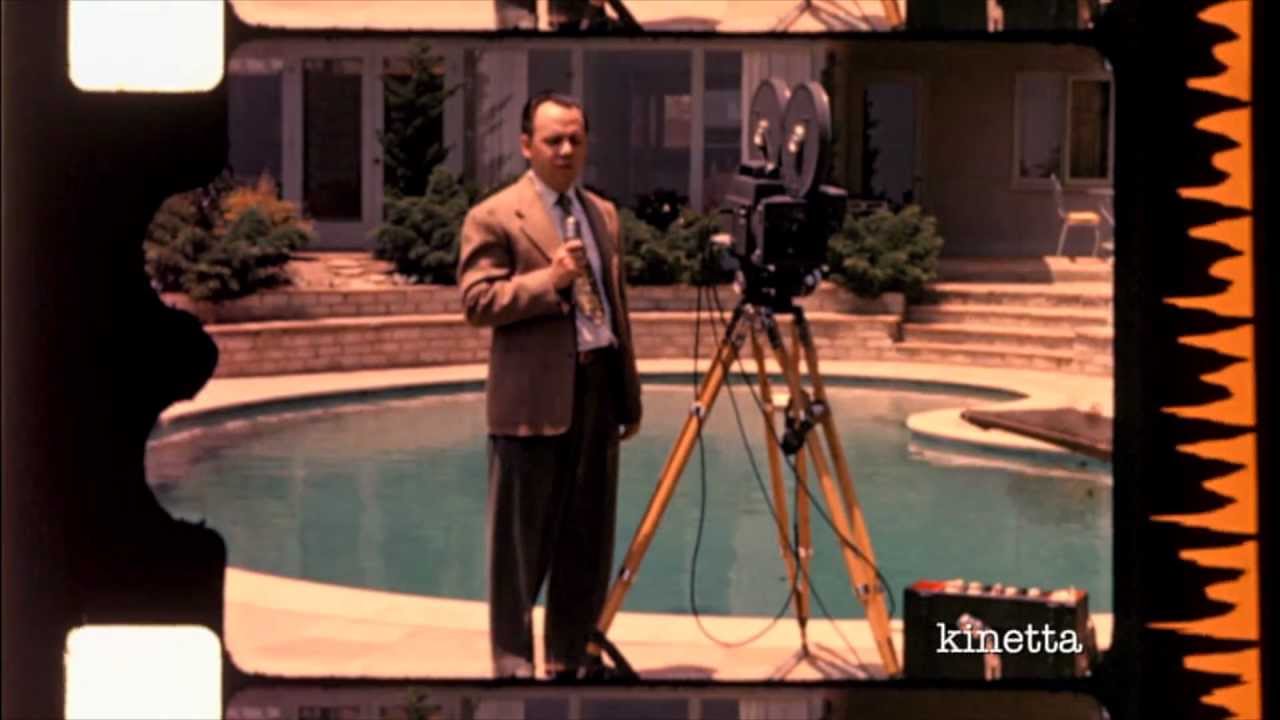
Now This Is Interesting! Introduction Of The Auricon Pro 1200
We don’t spend much time on film cameras here, but this is such an interesting piece of film, I thought you would like to see it. Thanks Steve Williams for sharing this.
At first, I thought the “studio finder” was perhaps an electronic video camera used as a video assist, but after seeing this a second time, I think it is just a large ground glass optical viewfinder. I have seen a couple of these in person, but never knew there were small lenses in the center of the turret for the cameraman’s eyepiece. You learn something new every day! Enjoy and share! -Bobby Ellerbee
[evp_embed_video url=”http://CDN.eyesofageneration.com/Content/Daily_Posts/2014/p70_9_14auricon.mp4″ preload=”none” template=”mediaelement”]
Source
The first sound camera I used was a Pro 600 in 1976 at KWWL in Waterloo Iowa. Even with a transistor audio pack the camera and vibrator AC supply weighed around 100 pounds.
Most of the Auricons (and they were the standard) were actually the 100 foot model converted for use with Mitchell magazines. Film crews also carried a B&H70 (usually, occasionally a Bolex) so while the sound camera was shooting the podium (for example) the camera man would use it to shoot cutaways. Arri made a sound camera, but they were much more expensive.
Here’s a Auricon being used by WGAL8 in Lancaster PA…
I met Dr Bach when he was demonstrating the reflex camera, a gentleman. Sadly at Yorkshire TV we went with the Arriflex BL.
All of these type of ground glass finders with corresponding focal length to the “taking” lens presented an upside down image. Good for framing and focusing but not following action. So they had an optical finder with mattes to show the frame of various common focal length lenses.
Then, “C mount” zooms used their own internal finder.
I had an original Auricon cine voice 100′ spool load camera with an external finder zoom, portable battery powered tube optical single system recording amplifier and case. With the 120VAC supply for the camera motor and it’s battery, it was quite the handful to use by yourself.
All for 2.5 minutes of sound footage @ 24fps.
But they were important for sync sound location shoots for newsreel, then TV.
More than a few famous speeches Now exist because they were shot with an Auricon. The movement was so good that a lot of companies would buy the bottom of the line cinevoice and build the movement onto a news camera housing. The CP16 Cameras were also copied form the Auricon. AND there was a special version for doing kinescopes, with a special shutter. the 1200 ft capacity could deal with a half hour program, less the commercial breaks.
I always hoped these would flood the market cheap when stations converted to ENG. It never seemed to happen. I wonder what happened to all of them?