Yet Another Magic Moment! The Photo AND The Video
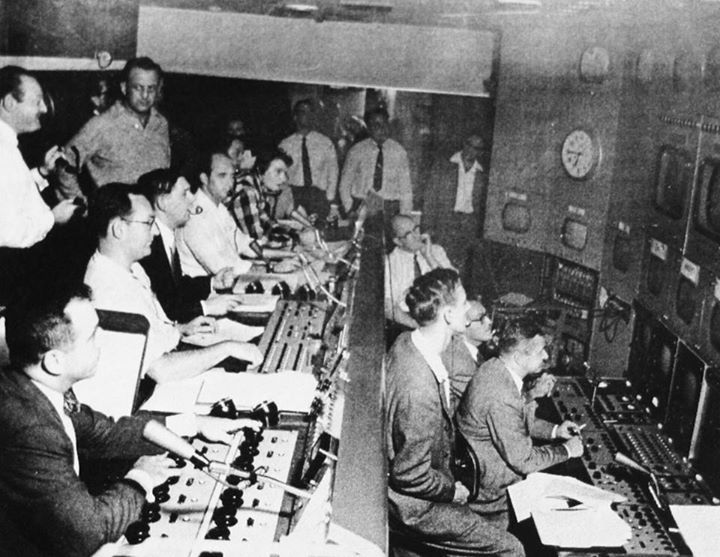
In the NBC 5H story, just before this, I mention ‘Wide, Wide World With Dave Garroway’. This show debuted almost two years after 5H went into service, but below is a photo from 5H taken of the WWW debut broadcast on Sunday, October 16, 1955.
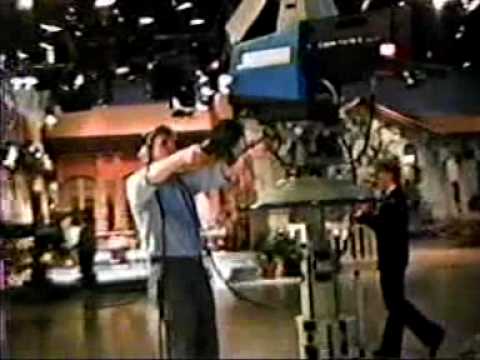
The video above is the opening of that debut show…a 90 minute weekly documentary series. Garroway and the live spots are coming from 8G, but 73 cameras spread across the country are feeding into 5H where the show is switched from. At the 4 minute mark is the great GM live spot delivered from behind a crane mounted TK30.
‘Wide, Wide World’ was telecast live on NBC late Sunday afternoons. Conceived by network head Pat Weaver, and hosted by Dave Garroway, Wide Wide World was introduced on the ‘Producers’ Showcase’ series on June 27, 1955. The premiere episode, featuring entertainment from the US, Canada and Mexico, was the first international North American telecast in the history of the medium.
It returned in the fall as a regular Sunday series, telecast from October 16, 1955 to June 8, 1958. The program was sponsored by General Motors and Barry Wood was the executive producer. Thanks to Joel Spector for this great, rare photo!
By the way…some of the remotes WWW did were some of the hardest EVER! If you thought putting a live network camera on a moving streetcar in San Francisco in 1955 was hard, wait till you read this next part!
Here are the logistics involved in setting up a live remote at Arkansas’ Claypool Reservoir where George Purvis, head of the Arkansas Game and Fish Commission, put 300,000 ducks on NBC:
There were many hurdles. Initially Purvis dealt with how to hide TV cameras, crews, control trucks and the necessary workmen and equipment and how to get electricity and telephone lines two miles (3 km) to the woods.
“To start with, the only way to get to the spot selected was over two miles of muddy woods roads where only tractors had gone before,” Purvis recalls. “The cameras would be two miles from the nearest power line or telephone. This meant using power generators placed far enough back in the woods so as not to disturb the wary ducks. Six telephone circuits were needed to send the audio part of the program to New York.
Even after stringing two miles of wire, there was just one circuit from Claypool’s Reservoir to Jonesboro, 20 miles away. So a radio loop was installed at the barn to cover the 20-mile (32 km) gap.
Camouflaged blinds were built for television cameras and operators, one of which was 40 feet up a hickory tree. An additional blind was built for the remote control truck.
The video would go from the camera to the control truck via the cable, then to an 80-foot (24 m) relay tower 1,000 feet (300 m) back in the woods, then 35 miles (56 km) to another relay tower, then 40 miles (64 km) to a third tower before being sent to Memphis. There it was transmitted 1,200 miles (1,900 km) to New York where the audio and video were combined to be broadcast live. With the electronics in place, the only thing left was to make sure that at an exact prearranged time there would be ducks in front of the cameras — over a quarter-of-a-million of them!
The man standing on the extreme left. Could that had been Pat Weaver holding the glasses?
Anyone who has ever done a remote will want to pay special attention to the last part of this article’s text.
I only wished there were more kines of Wide, Wide World available. Supposedly, NBC gave all of them to either the Library of Congress or National Archives, after the broadcast run, yet, when I did a search online a few years back, I found nothing.
I recall watching & listening to the rehearsal’s of the net monitor on Sat afternoons & Sunday mornings at a local TV station in TX. What a thrill to hear & see them work out the kinks. Great memories of early LIVE TV…
For the WWW broadcast in 1955, how many network microwave and Telco feeds could come in to 5-H? It seemed like a lot of jostling between circuits, say Western US, vs. Eastern US, flip-flopping with Telco to throw the switches between say, Grand Canyon, then after they were cleared, to Lake Mead, while the viewer was watching the underwater Florida video, etc. Simply amazing for live TV in the mid 50’s.
Great pic! Who was the director and TD?
Just screened the debut episode of WWW in my media history class at Temple University. The students put down their I-Phones to watch it and were floored by what was produced so early in the timeline of network television.