- Home
- TV History
- Network Studios History
- Cameras
- Archives
- Viewseum
- About
Skip to content

Posts in Category: TV History
Page 111 of 135
« Previous
1
2
3
4
5
6
7
8
9
10
11
12
13
14
15
16
17
18
19
20
21
22
23
24
25
26
27
28
29
30
31
32
33
34
35
36
37
38
39
40
41
42
43
44
45
46
47
48
49
50
51
52
53
54
55
56
57
58
59
60
61
62
63
64
65
66
67
68
69
70
71
72
73
74
75
76
77
78
79
80
81
82
83
84
85
86
87
88
89
90
91
92
93
94
95
96
97
98
99
100
101
102
103
104
105
106
107
108
109
110
111
112
113
114
115
116
117
118
119
120
121
122
123
124
125
126
127
128
129
130
131
132
133
134
135
Next » ‘Mike And Buff’
On June 30, 2013
- TV History
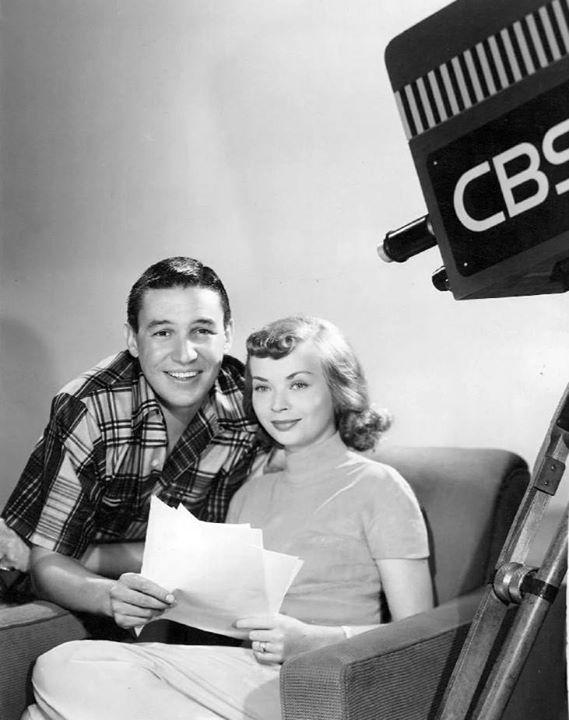
‘Mike And Buff’
In response to yesterday’s post on the CBS color broadcasts, Mark VonderEmbse noticed one of the shows broadcast was the ‘Mike And Buff’ show with Mike Wallace and then wife, Buff Cobb. Here is a 1951 publicity photo of them Mark sent. Thanks!
The 1936 RCA Iconoscope Camera (2 of 2)
On June 28, 2013
- TV History
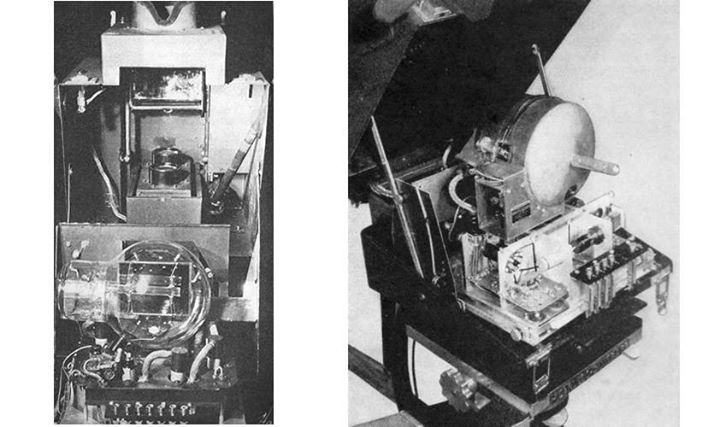
The 1936 RCA Iconoscope Camera (2 of 2)
These cameras opened from the rear and tilted forward for access to the tubes. On the left is the “studio version” which used a larger Iconoscope tube than the “field version” on the right, which usually had daylight to help light the scenes. Notice on the right, you can see the camera lenses and the optical viewfinder above the tube as the top is tipped forward. Thanks to Brian Summers and his great web site, http://www.tvcameramuseum.org/
The 1936 RCA Iconoscope Camera (1 of 2)
On June 28, 2013
- TV History
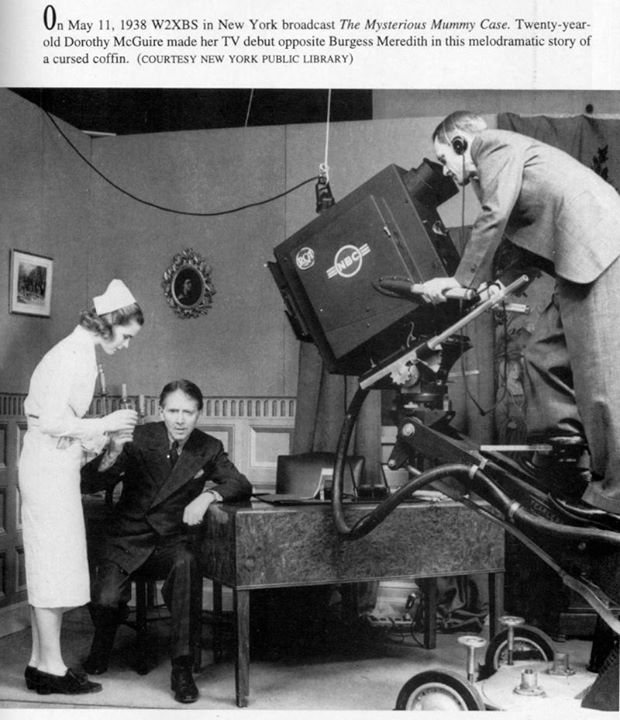
The 1936 RCA Iconoscope Camera (1 of 2)
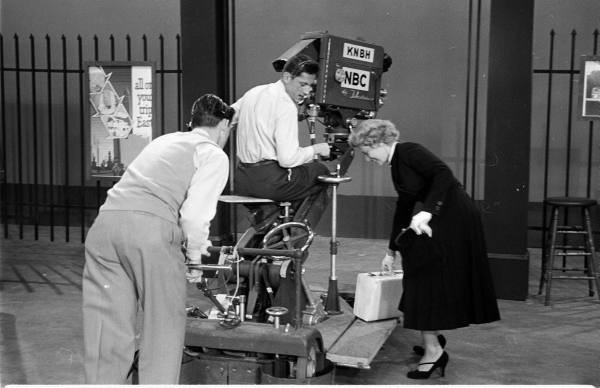
This is the original version of the first commercially available television cameras in the US. You often see this same camera chassis style painted silver, but actually, they are the same cameras. The only difference is that the silver version, called the RCA A500 has a different Iconoscope tube with 441 line resolution. This dark colored model has no model identification other than “studio version”, as there was also a field version with no viewfinder. This one is shooting Burgess Meredith and Dorothy McGuire on a 1938 production at NBC in NYC.
EMI, The Start Of Something Big…
On June 28, 2013
- TV History
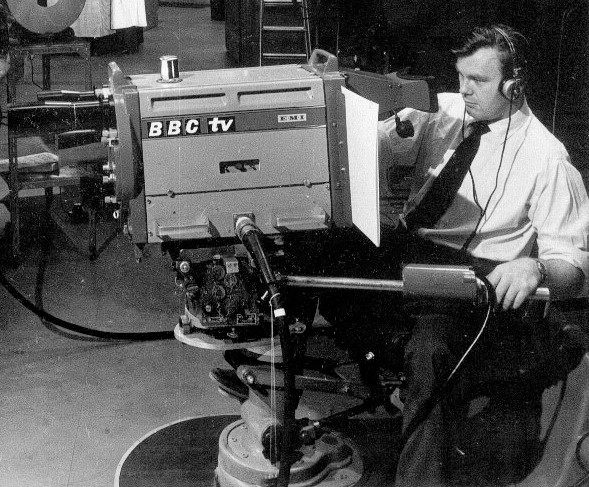
EMI, The Start Of Something Big…
Below is an EMI 203 Image Orthicon camera from 1960, but broadcast was just one area EMI was involved in. Here’s a short course on their history. Electric and Musical Industries Ltd was formed in March 1931 by the merger of the Columbia Graphophone Company and the Gramophone Company, with its “His Master’s Voice” record label, firms that have a history extending back to the origins of recorded sound. The new company produced sound recordings as well as recording and playback equipment.
The company’s gramophone manufacturing led to forty years of success with larger-scale electronics and electrical engineering. During and after the Second World War, the EMI Laboratories in Hayes, Hillingdon developed radar equipment and guided missiles, employing analogue computers. The company later became involved in broadcasting equipment, notably providing the first television transmitter to the BBC. It also manufactured broadcast television cameras for British television production companies, and for the BBC. The commercial television ITV companies used them as well alongside cameras made by Pye and Marconi. Their best remembered piece of broadcast television equipment was the EMI 2001 colour television camera, which became the mainstay of much of the British television industry from the end of the 1960s until the early 1980s. Exports of this piece of equipment were low, however, and EMI left this area of product manufacture.
KTLA Mobile Units 1956
On June 27, 2013
- TV History, Viewseum
KTLA Mobile Units 1956
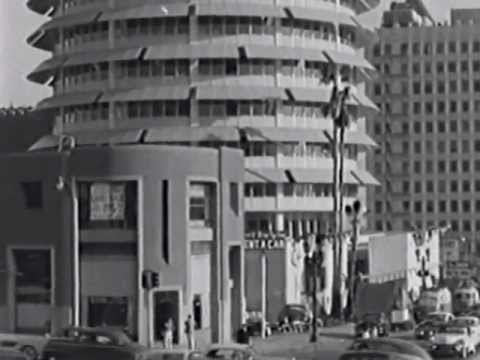
In the first 3 or 4 minutes, we get to see the KTLA mobile units set up their TK30s and film cameras to cover the opening of the Capitol Records Tower. After that, there is tour of the new digs, that takes in all but the recording studios. Thanks to David Crosthwait for sending this video.
Dinah Shore…Her Early TV Career
On June 26, 2013
- TV History
Dinah Shore…Her Early TV Career
Soon after she arrived in New York in 1937, Shore made her first television appearances on experimental broadcasts for NBC. Twelve years later, in 1949, she made her official television show debut on the Ed Wynn Show and in 1950 made a guest appearance on Bob Hope’s first television show. After being on other television shows, she got her own program, The Dinah Shore Show on NBC in 1951.She did two 15-minute shows a week for NBC til 1955.
In 1956, Shore began hosting a monthly series of one-hour full-color spectaculars as part of NBC’s The Chevy Show series. These proved so popular that the show was renamed The Dinah Shore Chevy Show the following season, with Shore becoming the full-time host of the show that aired three out of four weeks in the month. Broadcast live and in NBC’s famous “Living Color,” this variety show was one of the most popular of the 1950s and early 1960s and featured the television debuts of stars of the era, such as Yves Montand and Maureen O’Hara, and featured Dinah in performances alongside Ella Fitzgerald, Mahalia Jackson, Peggy Lee, Frank Sinatra and Pearl Bailey. She also appeared as a guest on another Chevrolet-sponsored variety show, The Pat Boone Chevy Showroom on ABC.
The Dinah Shore Chevy Show ran through the 1961-1962 season, after which Chevrolet dropped sponsorship, and Shore hosted a series of monthly broadcasts sponsored by The American Dairy Association and Green Stamps. Simply called “The Dinah Shore Show”, Dinah’s guests included Nat “King” Cole, Bing Crosby, Jack Lemmon, and a young Barbra Streisand. Over twelve seasons, from 1951 to 1963, Shore made 125 hour-long programs and 444 fifteen-minute shows. She always ended her televised programs by throwing an enthusiastic kiss directly to the cameras (and viewers) and exclaiming “MWAH!” to the audience.
From KECA To KABC…
On June 25, 2013
- TV History
From KECA To KABC…
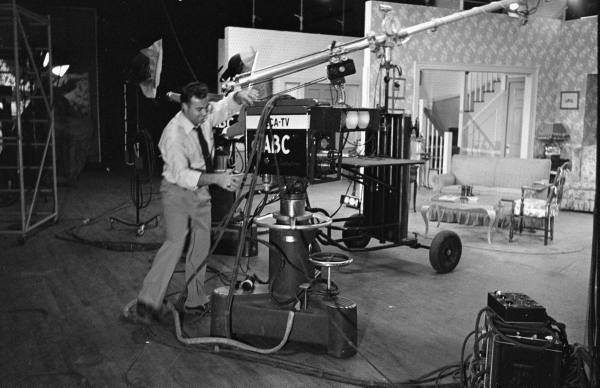
Before we get to the history, notice the dual floodlights on the front of this RCA TK10. Channel 7 first signed on the air under the callsign KECA-TV on September 16, 1949. It was the last television station licensed to Los Angeles operating on the VHF band to sign on, and the last of ABC’s five original owned-and-operated stations to make their debut (after San Francisco’s KGO-TV, which signed on four months earlier).
The station’s callsign was named after Los Angeles broadcasting pioneer Earle C. Anthony, whose initials were also present on channel 7’s then-sister radio station, KECA (790 AM), which had served as the Los Angeles affiliate of the NBC Blue Network. Anthony’s other Los Angeles radio station, KFI, was aligned with the Red Network. The Red Network survived the split of the two NBC radio networks ordered by the Federal Communications Commission in 1943. Edward J. Noble, who bought the Blue Network (beginning its transformation into ABC), purchased KECA radio a year later when the FCC forced Anthony to divest one of his Los Angeles radio stations. On February 1, 1954, KECA-TV changed its callsign to the present-day KABC-TV.
On Location…Taking a breather between scenes
On June 25, 2013
- TV History
On Location…
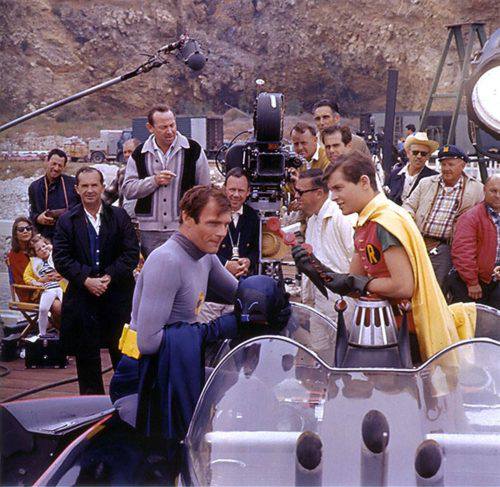
Taking a breather between scenes, Batman and Robin plan their moves in the Batmobile before the director calls “Action”. It aired on ABC for three seasons from January 12, 1966 to March 14, 1968. The show was aired twice weekly for its first two seasons, resulting in the production of a total of 120 episodes.
The Vinten ‘Heron’ Studio Crane …
On June 24, 2013
- TV History
Takes A Lickin’ And Keeps On Tickin’
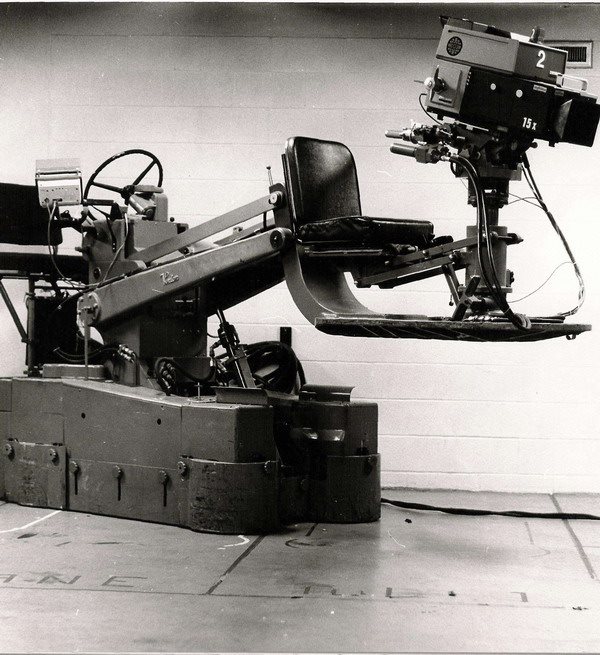
This is the Vinten ‘Heron’ studio crane and a Marconi Mark VIII plumbicon camera at the CBC studios in Montreal in the early to mid 70s. After a long stay in storage, it was returned to service last year.
Before Lucy, Gertrude Berg was “The First Lady Of Television”
On June 23, 2013
- TV History
Before Lucy, Gertrude Berg was “The First Lady Of Television”
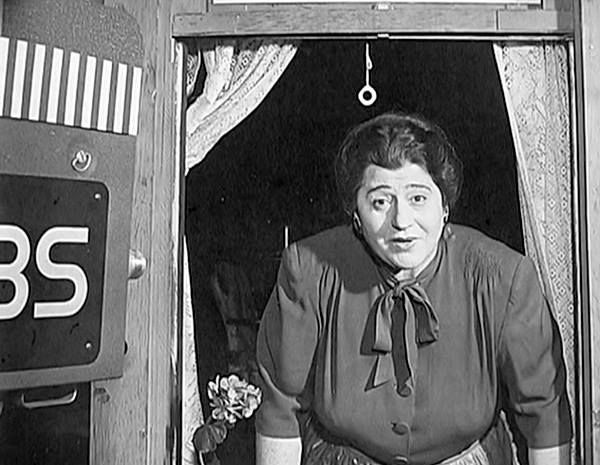
‘The Goldbergs’ was a comedy-drama broadcast from 1929 to 1946 on radio, and from 1949 to 1956 on television. The program was devised by writer-actress Gertrude Berg in 1928 and sold to the NBC radio network the following year. It was a domestic comedy featuring the home life of a Jewish family, supposedly located at 1038 East Tremont Avenue in the Bronx. In addition to writing the scripts and directing each episode, Berg starred in the series. The link above is to a clip of a 1949 episode on CBS.
The television version ran on CBS Television from 1949 to 1951 and co-starred Philip Loeb as Jake Goldberg. He and Gertrude Berg reprised their roles in a 1950 film of the same name. The show almost didn’t get to the small screen at all: CBS executives were uncertain that the show would work on television as well as it did on radio. Berg prevailed, however, and picked up General Foods (Sanka coffee) as its sponsor.
Berg, who continued to write every episode, insisted that no studio audience be used and made sure everyday events formed the base for the stories; she was once quoted as saying she avoided “anything that will bother people … unions, fund raising, Zionism, socialism, intergroup relations. … I keep things average. I don’t want to lose friends.” Berg’s hard work and determination paid off. In 1950, she won the first Best Actress Emmy Award for her role as Molly on The Goldbergs.
The Goldbergs was destined to spend almost a decade on television—but not without disruptions. In 1950, Philip Loeb was blacklisted and pressure was placed on Berg (who owned the television version as she had the radio original) to fire him. When she refused, General Foods cancelled their sponsorship, and CBS dropped it from their schedule by June 1951.
Eight months later, however NBC—the show’s original broadcasting home—picked up the series for the 1952–53 season, but informed Gertrude Berg that if she persisted in allowing Philip Loeb to remain with the series, it would never be seen on television again. She finally gave in, and the series reappeared in a twice-weekly, early-evening 15 minute format (with another change in title, to Molly, in due course), with Harold Stone and then Robert H. Harris replacing Loeb as Jake, though Berg quietly continued to pay a salary to Loeb.
After The Goldbergs ended its CBS run, Tom Taylor replaced Larry Robinson in the role of Molly’s son, Sammy. The rest of the television cast included Eli Mintz as Uncle David, Arlene McQuade as Rosalie and Betty Bendyke as Dora Barnett. On radio, Sammy and Rosalie had grown up and gotten married; on television, the characters were revived as teenagers. During this time, Gertrude Berg and Arlene McQuade appeared as their characters of Molly and Rosalie, respectively, when they guested on NBC-TV’s Texaco Star Theater starring Milton Berle.
In 1954, the show reverted to a weekly half-hour, moving to the DuMont network for a run from April to October. The series was originally intended to run for six months on DuMont, but, due to financial difficulties, the network was unable to fulfill the $5 million contract, despite Nielsen ratings estimated at ten million viewers. The DuMont shows were aired live.
A final version, aired in syndication, was filmed in 1955 and aired on local stations until 1956. This version moved the Goldbergs from the Bronx to the New York suburb of Haverville. In a way this mirrored the real life journey of many Jewish families from the Bronx to the suburbs and other parts of New York during this period. However, this was considered the death knell of the show, as it was felt that the Goldbergs were only the Goldbergs in the Bronx. Also in 1955, Philip Loeb, beset by depression and unable to find other work, committed suicide. In 1957, Gertrude Berg made her last two appearances as Molly Goldberg: first on an episode of the NBC-TV variety series Washington Square with Ray Bolger, and then on a Kate Smith special that aired on ABC-TV.
Up In Smoke…Johnny gets tangled in a joke
On June 22, 2013
- TV History
The Great Carsoni, Up In Smoke
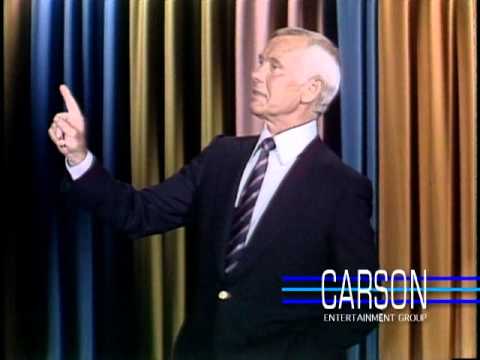
Johnny gets tangled in a joke, but the boom operator’s attempt to help only digs the hole deeper. At the end, Johnny goes up on the boom for a “chat”.
Johnny tries to get through a joke with a little help from his staff. Visit http://www.facebook.com/OfficialJohnnyCarson to like “The Tonight Show Starring J…
‘Kiss Me Kate’, NBC November 20, 1958
On June 21, 2013
- TV History
‘Kiss Me Kate’, NBC November 20, 1958
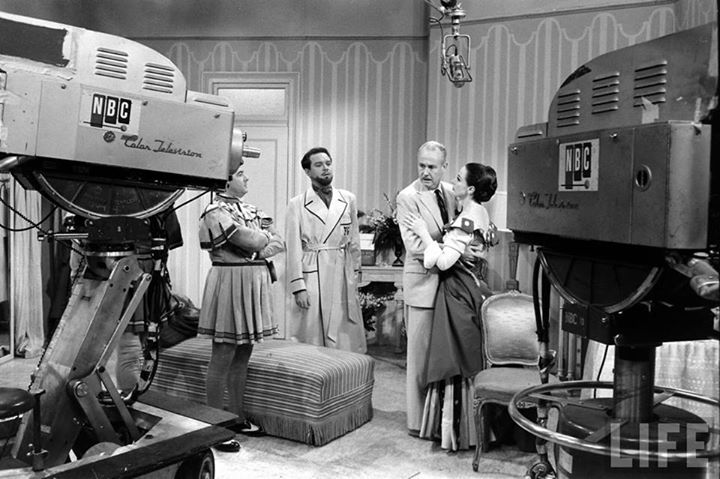
This production of the Cole Porter musical was done for The Hallmark Hall Of Fame. The cardboard viewfinder shades on the TK41s tell us this was done at NBC Brooklyn Studios.
Hail To The Chief…And The ‘Sheriff’
On June 19, 2013
- TV History
Hail To The Chief…And The ‘Sheriff’
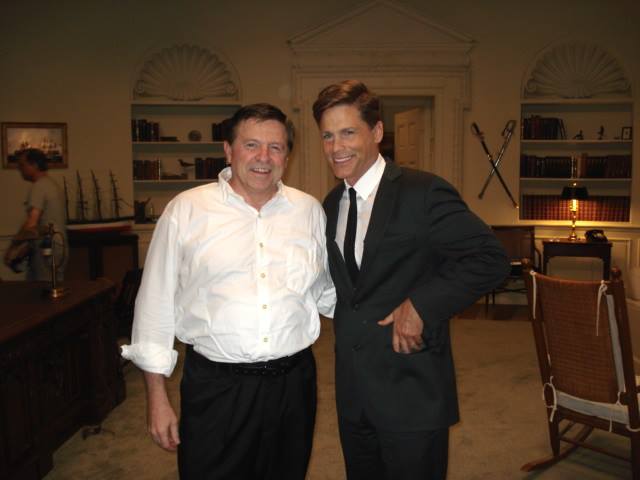
Here is yours truly with Rob Lowe in the Oval Office. In a break between scenes, I got a chance to meet Rob and after a couple of minutes conversation, I told him I play the Sheriff on ‘Squidbillies’. He instantly lit up, laughed and said “I thought you sounded familiar”. Seems he and his sons, 17 and 20 all watch the show and have since his boys turned him on to it a few years back. From just the part’s I’ve seen, he makes a very believable JFK. I thought he was great in ‘West Wing’ and all of the Mike Meyers ‘Austin Powers’ movies and ‘Wayne’s World’.
My Cameras On The Set of “Killing Kennedy”
On June 18, 2013
- TV History
Be Here Tomorrow! I Just Got Back…
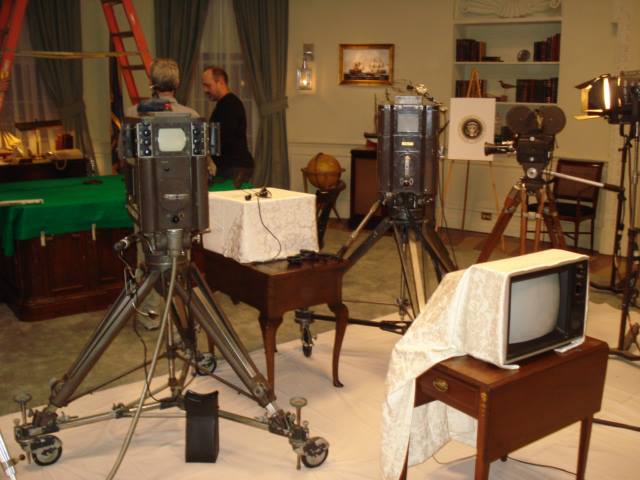
I’m very tired, but wanted you to know I’ll have some great pictures in the morning of ‘The Killing Of Kennedy’ docudrama that I, and these 3 cameras were a part of this morning at New Millennium Studios in Richmond VA.
Know What The Yellow Flag Is For? Read On….
On June 16, 2013
- TV History
Ever See This?
This is an early model of the European made Phillips PC 60. The yellow flag on top is the zoom flag…the wider the shot, the higher the yellow flag. This is to let boom operators and other cameras know each other’s field of vision so they can stay out of the shot. Broadcasters did not like the tiny tally lights or the half visible dome tally because the talent had a hard time seeing them. The European made cameras were made in The Netherlands and in the UK at PYE, which by 1965 was a part of Philips. In the US, only CBS had European made PC 60s, but only 10 or so, as they were the first to place a big order. The other 80+ PC 60s and 70s for CBS came from the Norelco plant in New York. CBC had some European made PC 60s and some NY made 60s and 70s.
The Heart Of CBS News
On June 15, 2013
- TV History
The Heart Of CBS News
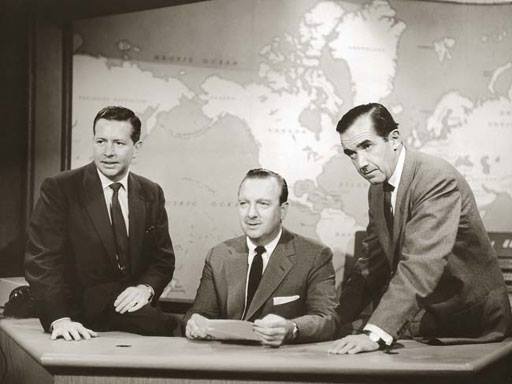
Left to right, Douglas Edwards, Walter Cronkite and Edward R Murrow. CBS began broadcasting news shows on Saturday nights, expanding to two nights a week in 1947. On May 3, 1948, Douglas Edwards began anchoring CBS Television News, a regular 15-minute nightly newscast. It aired every weeknight at 7:30 PM, and was the first regularly scheduled, network television news program to use an anchor. The week’s news stories were recapped Sunday night with Newsweek in Review. The name was later shortened to Week in Review and the show was moved to Saturday. In 1950, the name of the nightly news was changed to Douglas Edwards with the News, and the following year, it became the first news program to be broadcast on both coasts, thanks to a new coaxial cable connection, prompting Edwards to use the greeting “Good evening everyone, coast to coast. Walter Cronkite became anchor on April 16, 1962. On September 2, 1963, CBS Evening News became network television’s first half-hour weeknight news broadcast, lengthened from its original 15 minutes, and telecast at 6:30 PM. The Huntley-Brinkley Report expanded to 30 minutes on September 9, 1963, exactly a week after CBS Evening News with Walter Cronkite did so. Murrow gained fame on CBS radio with his reporting from London during World War II. After the war, he became the president of CBS News but later gave up that post to return to reporting on radio and television.
First Ever Image Orthicon Broadcast: June 19, 1946
On June 15, 2013
- TV History
First Ever Image Orthicon Broadcast: June 19, 1946
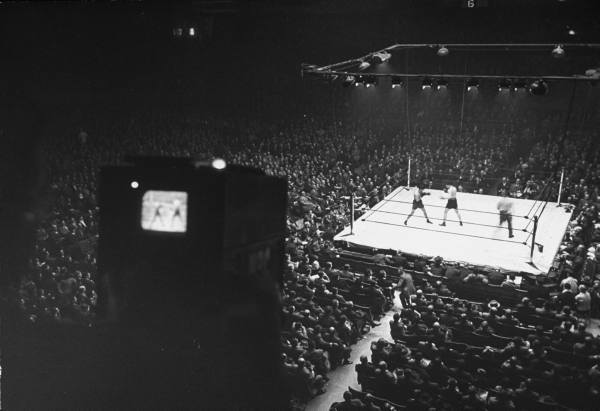
In this photo, you see one of four RCA TK30s at the Joe Lewis – Billy Conn rematch. The fight, at Yankee Stadium, was the first televised World Heavyweight Championship bout ever, and 146,000 people watched it on TV, also setting a record for the most seen world heavyweight bout in history. The Image Orthicon tube required only a tenth of the light that Iconoscope and Orthicon tubes required. The TK30s and TK10s were also the first cameras to have lens turrets.
The Ikegami HK312 E
On June 14, 2013
- TV History
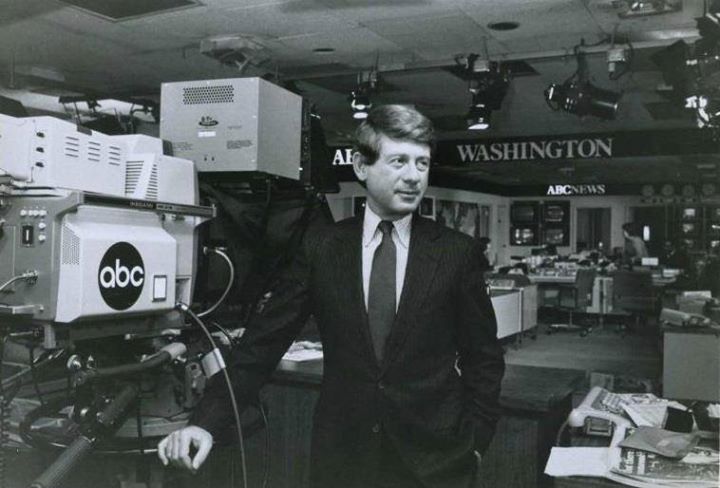
The Ikegami HK312 E
Here’s Ted Koppel with the triax version of the HK312 at ABC’s Washington news studio around 1986. I think the HK312 D model was a triax camera as well and may have still had the dark brown viewfinder like the A model. The big bulge on the side is the triax box.
RCA TK760
On June 13, 2013
- Archives, TV History
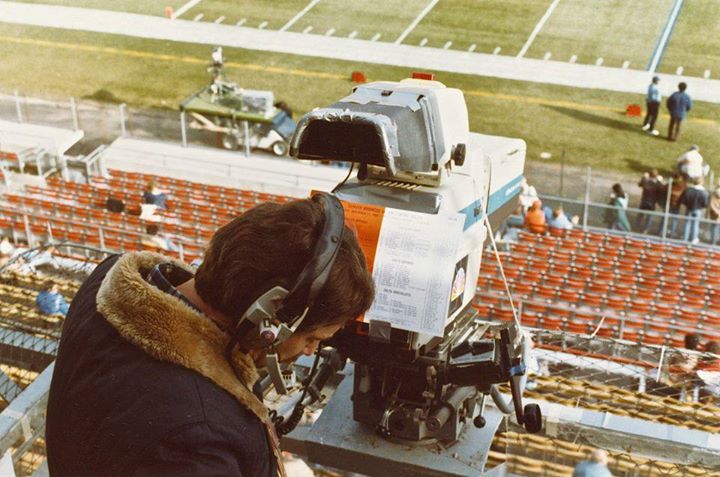
RCA TK760
This camera is basically an RCA TK76 ENG camera and was introduced in 1977 as a field and studio camera. Before there were large lens adaptor and large viewfinder adapters, this is how it was done. This photo was taken at Denver’s Mile High Stadium in 1978 as NBC prepares for a Broncos football game. Thanks to David Crosthwait for the picture.
Early UN Security Council Meeting, 1946
On June 11, 2013
- TV History
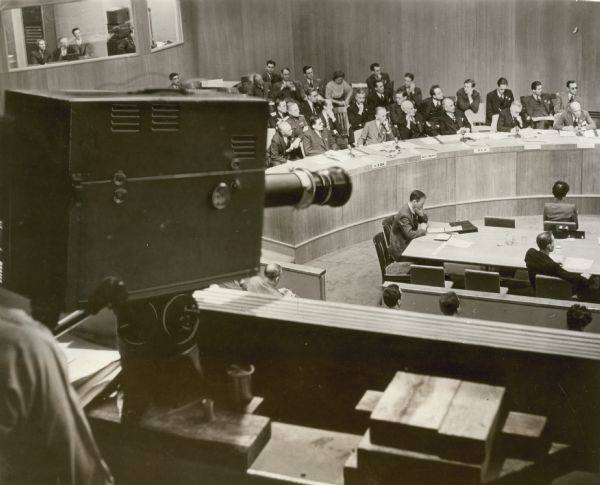
Early UN Security Council Meeting, 1946
Around the middle of 1946, the newly founded United Nations set up facilities at the Sperry Corporation building in Lake Success, NY. That was their HQ till the UN building was completed in NYC in 1952. This RCA Orthicon camera was used to televise the first Security Council meeting held in the US. The first was held in London in 1945 when the UN charter was written.
Page 111 of 135
« Previous
1
2
3
4
5
6
7
8
9
10
11
12
13
14
15
16
17
18
19
20
21
22
23
24
25
26
27
28
29
30
31
32
33
34
35
36
37
38
39
40
41
42
43
44
45
46
47
48
49
50
51
52
53
54
55
56
57
58
59
60
61
62
63
64
65
66
67
68
69
70
71
72
73
74
75
76
77
78
79
80
81
82
83
84
85
86
87
88
89
90
91
92
93
94
95
96
97
98
99
100
101
102
103
104
105
106
107
108
109
110
111
112
113
114
115
116
117
118
119
120
121
122
123
124
125
126
127
128
129
130
131
132
133
134
135
Next »