January 20, 1961…President Kennedy Inaugurated; “Camelot” Begins
Today, I am going to tell you a story you have never heard. It would be best if you watch this short clip fist to set the mood. The second half is especially rich for those of us who remember these years.
On November 8, 1960, Massachusetts Senator John Kennedy was elected President of The United States. A month before, on October 6, 1960, “Camelot” made it’s world debut in Toronto for a month of preview performances. In the first week of November, the show moved to Boston for another month of previews, where more revisions were made to the performance as it headed to Broadway.
This is where President Elect Kennedy and his wife Jackie first saw the show, and given copies of the original cast recording by his friends Alan Lerner and Fredrick Loewe. Kennedy and Lerner had gone to prep school together.
On December 3, 1960, “Camelot”, the most anticipated new musical in years, opened on Broadway at The Majestic Theater starring Richard Burton and Julie Andrews. On it’s way there, it had gone though a lot of revision and the stress of reworking the play had put both Lerner and Loewe in the hospital with a heart attack and ulcer. The difficulty got them the cover of Time Magazine the second week of November with the lead story, “A Rough Road To Broadway”. On the cover of Time the week before, and the week after…JFK.
Who can forget the night Marilyn Monroe sang to the President at his 45th birthday at Madison Square Gardens? The next year, Learner and Loewe gave JFK his last birthday party at The Waldorf Astoria.
According to Ted Kennedy, only family and few close friends knew that JFK was actually a very good singer. At The White House, he would occasionally sing along with songs he and Jackie played before going to bed. The singing was occasional, but listening to music at the end of the day was a ritual that helped ease the pressures of the job, and some of his physical pains.
A week after his death, Jackie Kennedy gave an interview to Life Magazine. In it, she said that her husbands all time favorite song was “Camelot”, and went on to quote their favorite line…
“Don’t let it be forgot, that once there was a spot, for one brief shining moment, that was known as Camelot”.
She ended the interview with these words…”There will be great presidents again, but there will never be another Camelot.”
The sense of loss felt by the public and the association between the song and the show was evident to all as “Camelot” toured the U.S. in the months after JFK’s death. When the houselights came up following the “Camelot” finale, the audience was often crying en masse.
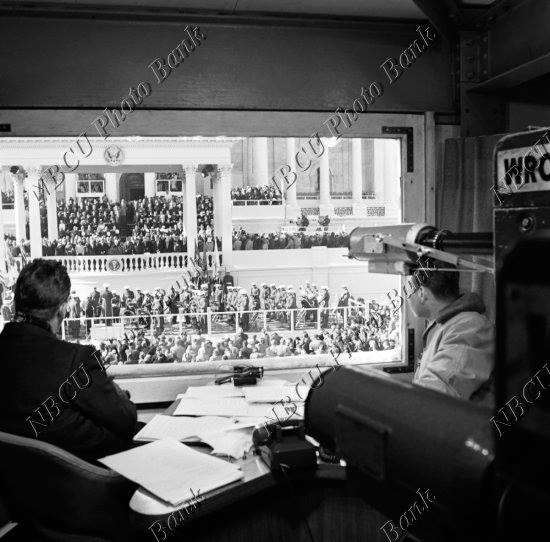
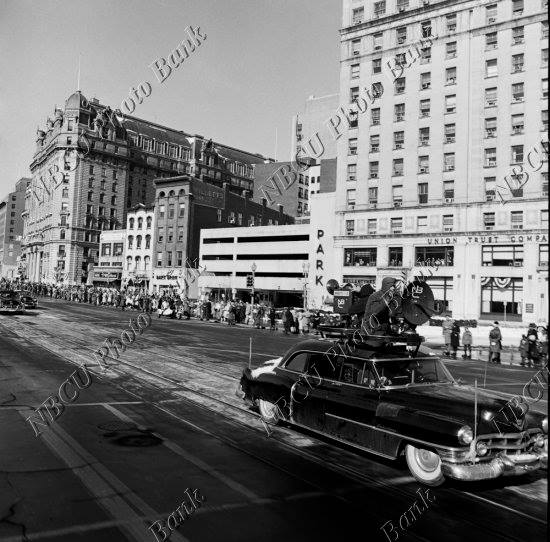
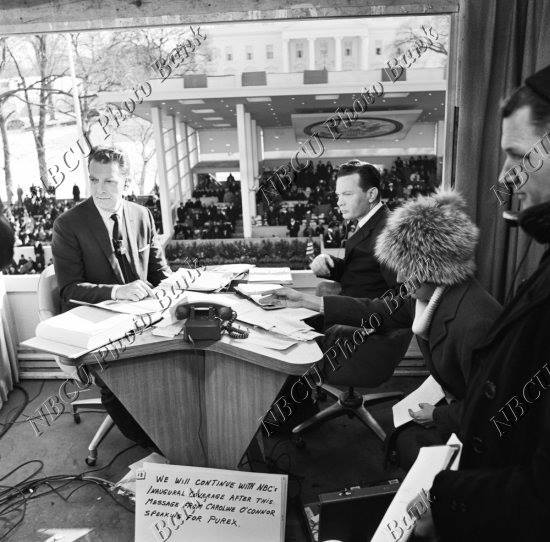
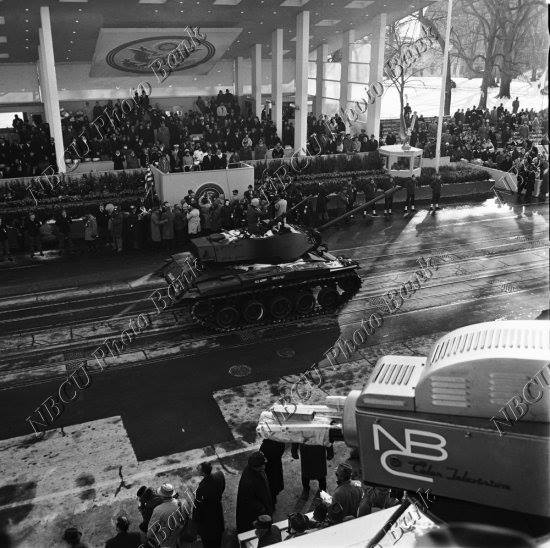
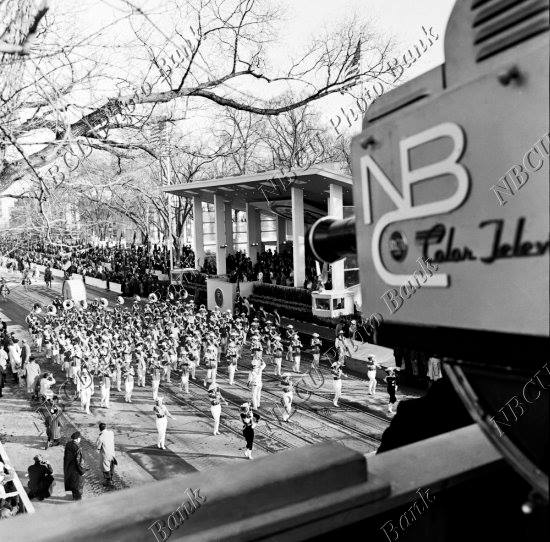
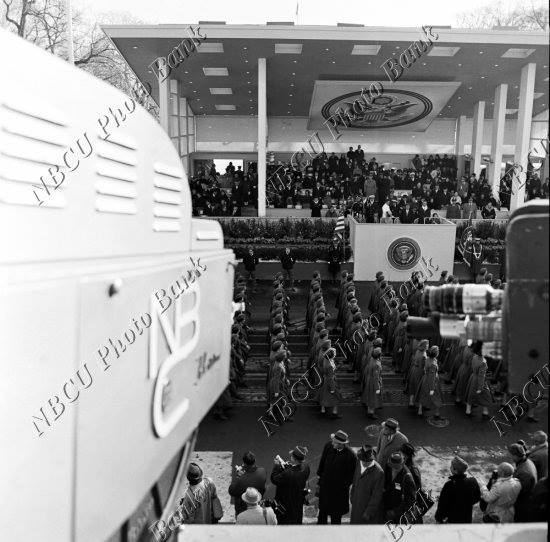
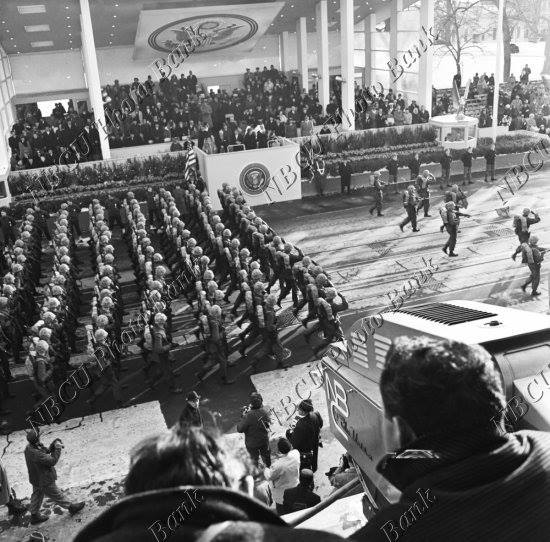
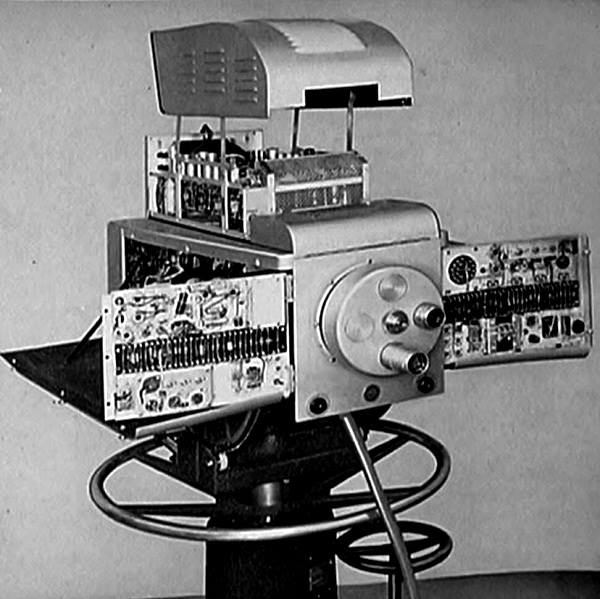
As I understand it, the NBC coverage that day was mostly black and white, even with thier own TK30s at the swearing in and along the Kennedy Inaugral Parade route, and consisted mostly of pool fed shots in black and white of the parade from the Capitol to the White House reviewing stands. As you see, their RCA TK41 color cameras took over the broadcast at the reviewing stands and I’ve been told that part was in color for those who had color sets.
Huntley and Brinkley at the swearing in ceremony. This was when the inaugurations were held on the east side of the Capitol Building (the side facing the Supreme Court and Library of Congress).
The acutal NBC name for this famous, custom made camera car was “The Cadillac”
Chet and David at the Reviewing Stands at another of Hjalmar Hermanson’s famous X-shaped desks.
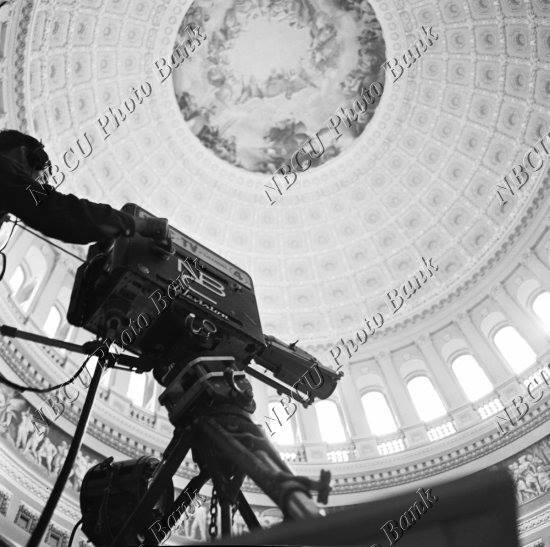
The double pan head here allows the camera to tilt all the way up to see the center of the Capitol Rotunda.
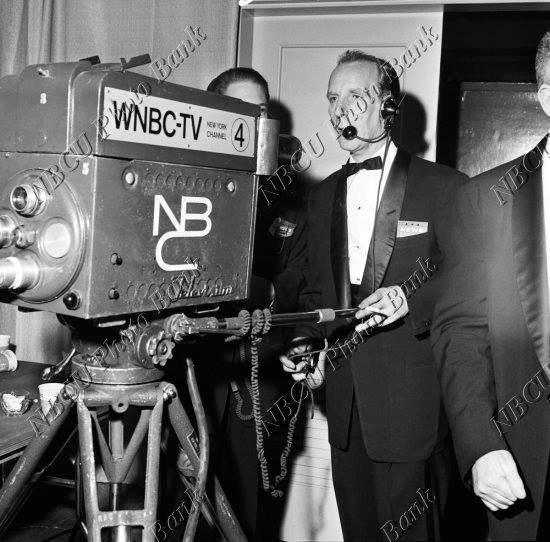
NBC Cameraman Red Trudell giving us live pictures from one of the Inaugural Balls that night.
I think this is a CBS or ABC TK 30 next to NBC’s TK41 at the reviewing stands
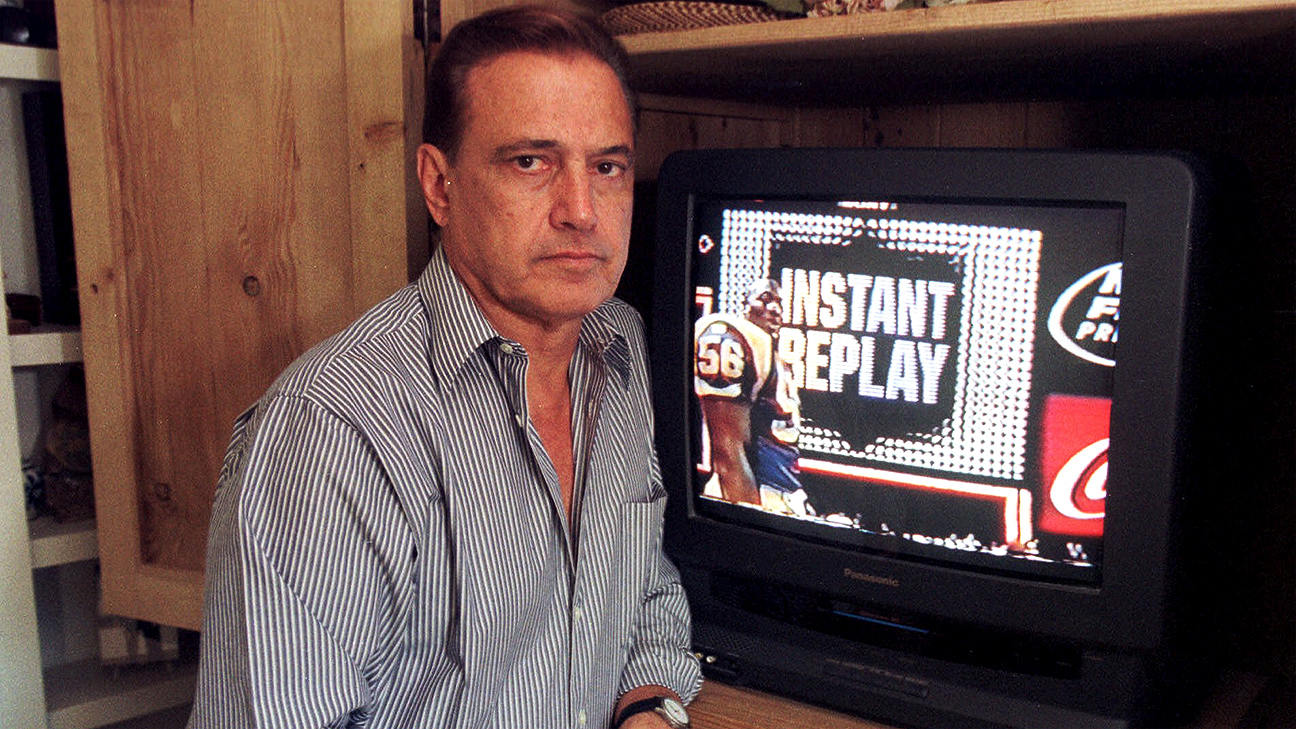
PALM DESERT, Calif. — Tony Verna, a television director and producer who invented instant replay for live sports 51 years ago, has died. He was 81.
Verna died Sunday at his Palm Desert home after battling acute lymphoblastic leukemia, daughter Tracy Soiseth said.
CBS used instant replay for the first time in the Dec. 7, 1963, Army-Navy football game in Philadelphia, after Verna developed a method to cue the tape to pinpoint the play he wanted to immediately air again. He said he was looking for a way to fill boring gaps between plays during a football telecast.
The concept was so new that when Army quarterback Rollie Stichweh scored a touchdown, announcer Lindsey Nelson had to warn viewers: “This is not live! Ladies and gentlemen, Army did not score again!”
Instant replay quickly became a staple of sports broadcasting, and Verna’s innovation gave fans a new way to look at the games.
“Not many things you can do in life where you can change the way things were happening before,” Verna told The Associated Press in 2008.
Verna would go on to produce or direct five Super Bowls, the Olympics, the Kentucky Derby and even the “Live Aid” concert in 1985.
His lasting legacy, though, is pulling back the curtain on sports and revealing what really goes on.
Verna is survived by his wife of 45 years, Carol, daughters Tracy Soiseth and Jenny Axelrod, son Eric Verna and three grandchildren.
TeleTales #16…The Rube Goldberg Magic Of Busby Berkely
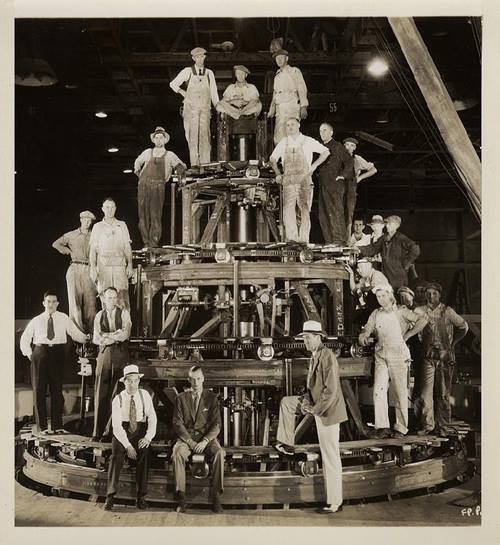
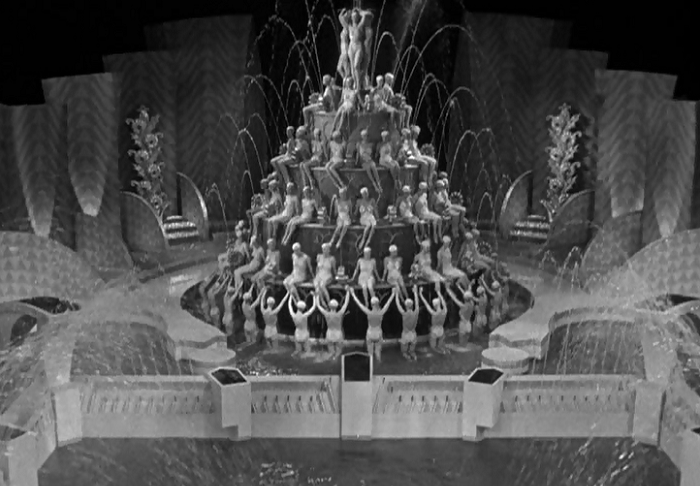
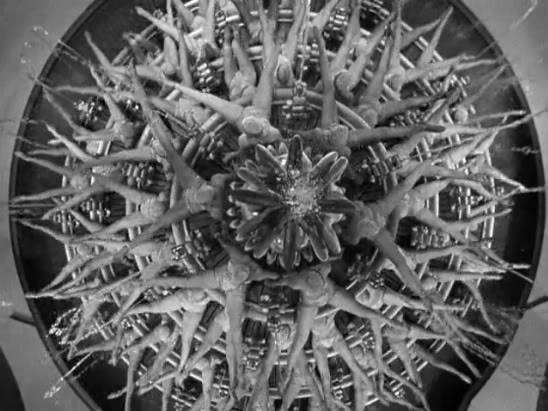
At the 48 second mark in this video you’ll see this contraption on the big screen in the “By A Waterfall” scene of “Foot Light Parade” from 1933 staring Dick Powell and Ruby Keeler. If you start about 3 minutes earlier, you will see some of what Berkely was famous for…those beautifully choreographed, elaborate, geometric overhead shots.
In the big picture, we see the mechanism itself before it was dressed for the stage. As you see in the video, it also squirts water which means hoses had to be built into it too. The many gizmos behind his magic are mechanical wonders in themselves. Enjoy and share! -Bobby Ellerbee
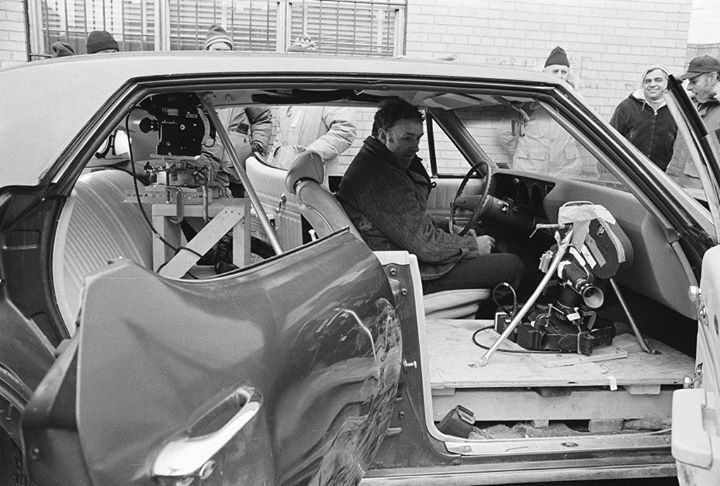
TeleTales #15…Setting Up For The Greatest Car Chase Ever
“The French Connection” principal car chase scene was widely considered to be the best ever put on film at the time, overtaking Bullitt (1968) for that honor.
There was no official permit from the city for the chase which was done with the help of off duty policemen. The car crash during the chase sequence, at the intersection of Stillwell Ave. and 86th St., was unplanned and was included because of its realism. The man whose car was hit had just left his house a few blocks from the intersection to go to work and was unaware that a car chase was being filmed. The producers later paid the bill for the repairs to his car.
By the way…according to director William Friedkin, the significance of the straw hat being tossed onto the shelf of the rear window in Doyle and Russo’s car was that at that time, it was a universal signal in New York City that the undercover cops in the car were on duty. Enjoy and share! -Bobby Ellerbee
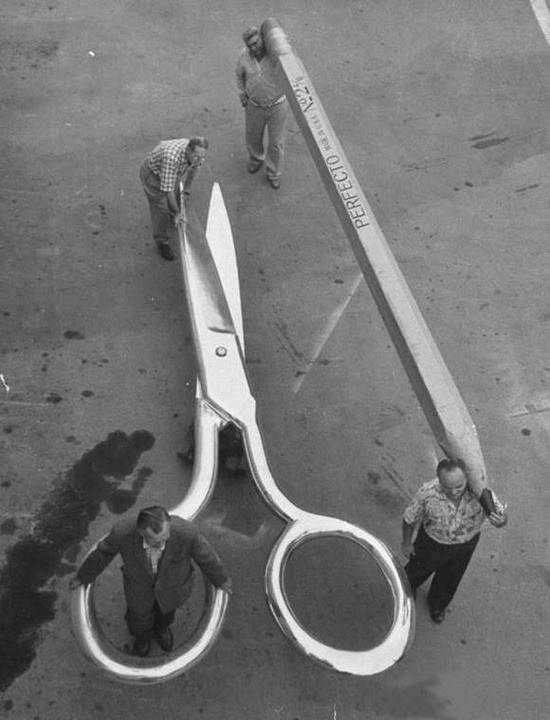
If you look at this long enough, you begin to wonder. The props are amazingly real looking aren’t they? They are from 1957’s “The Incredible Shrinking Man”. To simulate giant rain drops, prop men filled hundreds of condoms with water…many of which never made it to the set because of frequent water balloon fights. Condoms were used because they were clear and not colored like balloons, which looked more real as they fell. Enjoy and share. -Bobby Ellerbee
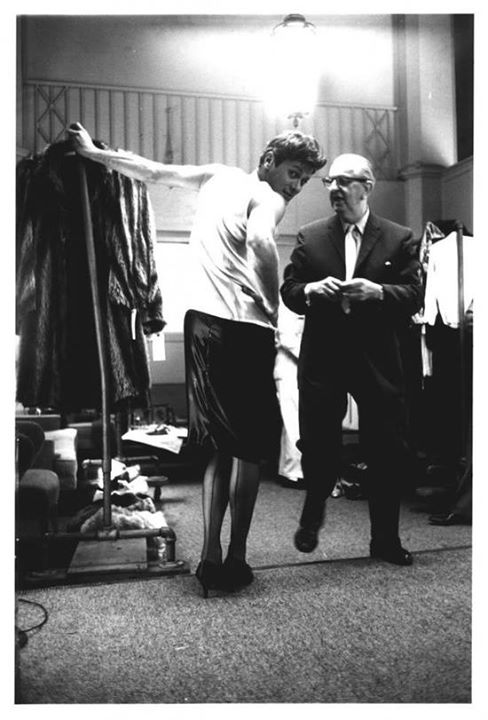
Did you know that when Tony Curtis and Jack Lemmon first put on the female make-up and costumes, they walked around the Goldwyn Studios lot to see if they could “pass” as women? It worked, but just to make sure, they then tried using mirrors in public ladies rooms to fix their makeup, and when none of the women using it complained, they knew they could be convincing as women. There is a scene on the train recreating this moment.
Danny Kaye and Bob Hope were considered for the roles that went to Jack Lemmon and Tony Curtis. Jerry Lewis was offered the role ultimately played by Jack Lemmon, but declined because he didn’t want to dress in drag. When Lemmon received an Oscar for the role that Lewis gave up, Lewis claims Jack sent him chocolates every year to thank him. Enjoy and share! -Bobby Ellerbee
Could be. By the way, in case you are not visiting this page daily, there’s a good chance you are missing about half of what I post here. Just click on the blue text in the upper left corner and poof…you’re here! Enjoy and share! -Bobby Ellerbee
“All In The Family”…Best Retrospective Ever, In Five Parts
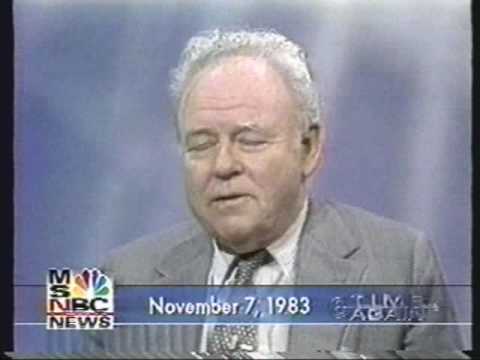
Last week, January 12, was the show’s anniversary and many of you asked for more. MSNBC’s “Time And Again” was in itself a great show that did an excellent job of documenting media history, so here is their April 2000 look at The Bunkers. Enjoy and share! -Bobby Ellerbee
From April 18, 2000, here is a great inside look at the sitcom to end all sitcoms, “All in the Family.” This is pat of the “Time and Again” series that MSNBC…
Dr. Lee De Forest…Pioneer Of Electronic Media; Wireless To Talkies
Lee de Forest’s entire life was devoted to the invention of media technology primarily based on sound. He supplied the missing voice to radio and film.
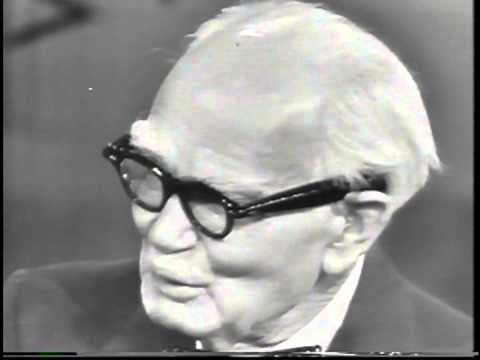
Here is his 1957 appearance on ‘This Is Your Life’ from what I think is either Studio 1 or 3 from the brand new NBC Burbank. There are a few interesting shots from the control room and of the studio scattered around the first prat of the video. There is even a rare appearance from Allan B. Dumont.
Following a solid Yale education in Physics and Electricity, he spent the decade between 1900 and 1910 improving the wireless telegraph, but he quickly tired of its limitations of sending coded messages. In 1906 he filed his first patent for the vacuum tube he called the Audion, describing it as a detector of sound.
By 1907 he had invented an arc-based radiotelephone transmitter and Audion receiver, and he was writing about the possibility of sending music into homes by wireless. Between 1910 and 1920 he improved his Audion as a detector, an amplifier, and later a transmitter of radio. He started several radio stations. He was an early if not the first broadcaster of entertainment-based audio, primarily opera music.
Between 1920 to 1930 he invented, patented and improved upon a system of recording a sound track on a strip of film, thus allowing accurate synchronization with the picture. Lee de Forest had invented the Talking Motion Picture. Enjoy and share! -Bobby Ellerbee
This show is about my Grandfather, Lee deForest. At the shot of his Grandchildren, I’m on the lower left. I was 9 at the time. Please enjoy! There are even s…
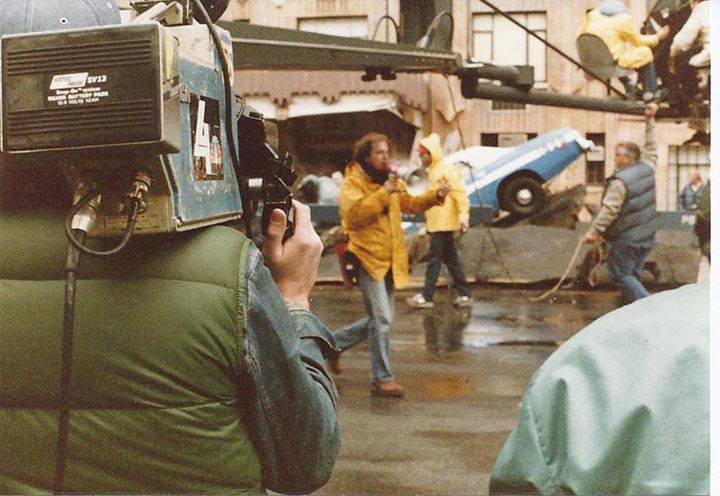
Here’s a WNBC TK76 shooting a local news segment on the movie in production and some of the traffic problems it was causing around town in 1984. Did you know that the original casting was intended to be John Belushi, Dan Aykroyd and Eddie Murphy as the Ghostbusters and John Candy as Lewis/Gozier? Enjoy and share! -Bobby Ellerbee
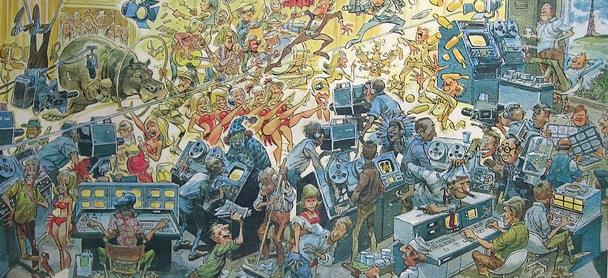
This is one of several posters MAD artist Jack Davis did for Ampex. These were usually given out at NAB conventions in the early 70s. I have been asked many times if there are hi res versions, but not that I can find. Anyone have better images? Enjoy and share! -Bobby Ellerbee
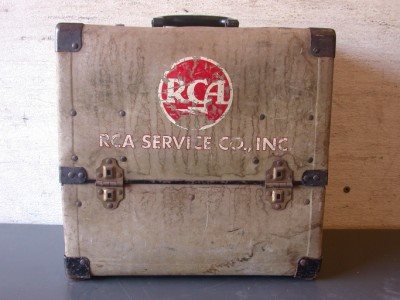
Back before everything became “disposable” (meaning there was no one to fix it if it broke), there were men that would come to your house to fix your TV set. These little cases were full of tools and tubes, and if you had a pro…he had a mirror too. Click Like if you know why.
Old times gone, but not forgotten. Enjoy and share! -Bobby Ellerbee
TeleTales #7…For Queen And Country, But Not On A Dare
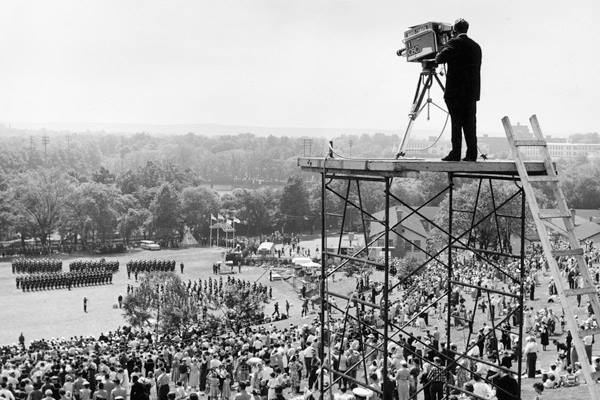
I get queeze just looking at this, and we only see about half of what looks to be about a 40 foot platform without a rope or rail in site. This is CBC cameraman in Halifax, Nova Scotia covering the 1959 royal visit from Queen Elizabeth. Enjoy and share, but don’t tell OSHA. -Bobby Ellerbee
By the way, I’m picking up the numbering that I left off with yesterday, so you didn’t miss six TeleTales today, but if you missed them yesterday, please always visit this page…just click the blue text in the upper left corner.
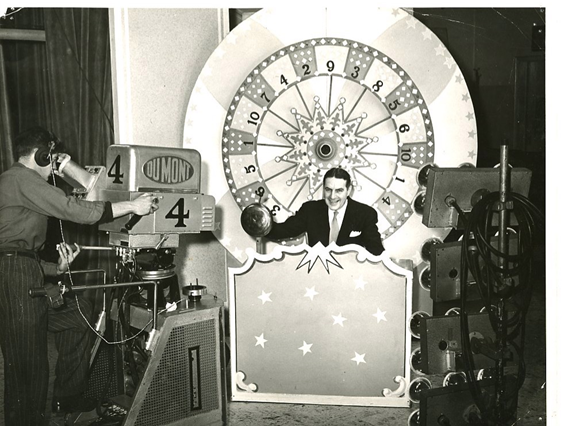
This is one of only a handful of shows that was eventually carried on every network over its 24 years on TV…Dumont, NBC, CBS and ABC.
Ted Mack was born in Greeley, CO and named Edward McGuiness. When he became a band leader and his name would not fit on a theater marque, the theater manager shortened his name to Ted Mack…and it stuck. He was an accomplished clarinet and saxophone player and musical conductor and had worked with with well known big bands like Glenn Miller, Benny Goodman, Red Nichols, Jack Teagarden and Ben Pollack.
Ted was the host of ‘The Original Amateur Hour’ on television for 24 years. He joined the radio edition of ‘The Major Bowes Amateur Hour’ in 1935 as a talent scout and was one of Bowes’ first assistants.
When Bowes retired in 1946, Mack took over as host and fronted the show when it debuted in 1948 on the Dumont Television Network. The show lasted until 1970 when Ted and his producers pulled the show off the air. It was estimated that over 1,000,000 aspirants auditioned for the show during its long tenure from the WHN radio days through its run on all four TV networks.
Like his mentor, Major Bowes, Ted Mack also died on the eve of his 72nd birthday…July 14, 1976. Bowes was a real estate speculator who got into the entertainment business by buying a Boston theater and later built the famed Capitol Theater in New York City in 1918 and was its managing director until his radio interests forced him to quit in the late 1930’s.
“The Original Amateur Hour” grew out of his interest in the Capitol Theater. In the early days of radio, as a promotional feature for the theater, Bowes started a Sunday noon hour broadcast over local radio station WHN. By 1934, the idea of the Amateur Hour had evolved and the program was presented nationally. Enjoy and share! -Bobby Ellerbee
‘Ziegfeld Of Television’…Picture Parade, Leibman, Caesar And Coca
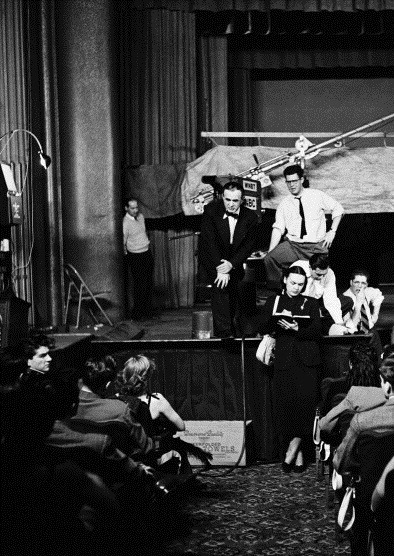
In the first photo, the man on stage with the bow-tie is Max Leibman talking with the staff and cast of ‘Your Show Of Shows’. The narration for the other photos is on each, so please click on them. Enjoy and share! -Bobby Ellerbee
This is Sid on stage at The International during The Admiral Broadway Revue
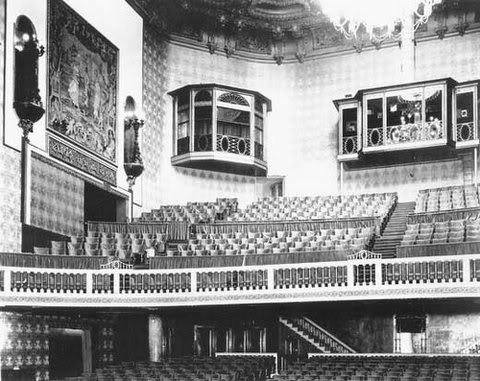
This is a rare shot of the inside of The International Theater at 5 Columbus Circle.
This is a shot of Sid on ‘Caesar’s Hour’, also at The International Theater.
YSOS, Sid listens to Max
This is a “Commuters” sketch from ‘Caesar’s Hour’
Sid and Imogene on YSOS
Max Leibman, wearing a bow tie, talks with cast and staff of YSOS at the International Theater. Sid Caesar is on the left, second row. Max
January 1949…The “Zeigfeld Of Television” Legend Begins
Before I get to the meat of this important story, let me first draw your attention to this video. It is cued to one of the most amazing bits I have ever seen! I think these are the Arnaut Brothers…they never say a word, but bring down the house with this unbelievable bird talk sketch.
‘The Admiral Broadway Revue’ was the first time Max Leibman brought his producing and directing skills to television. He also brought along his aspiring young comedians Sid Caesar and Imogene Coca.
In 1920, Liebman entered vaudeville as a comedy sketch-writer, and in 1924 started a long association with the Tamiment Theater, a Pocono Mountains resort, where he would remain for 15 years and discover such talent as Jerome Robins, Danny Kaye, Sid and Imogene. At the same time, he was writing for Broadway musical comedy revues.
In late 1948, Max was offered the job of producing a television show for Admiral…’The Admiral Broadway Revue’. He took the job and brought along his Pocono friends, including writer Mel Tolkin.
The one hour, Saturday night show was produced (as a remote broadcast) for NBC at The International Theater at 5 Columbus Circle. The show did so well that it had to be canceled? Yes! Admiral sales went through the roof and put them in the position of either building a second plant, or canceling the show.
It left the air in June of 1949, but the best was yet to come! Pat Weaver at NBC hired Max to produce a new show and by February of 1950, ‘Your Show Of Shows’ was ready for air with Sid and Imogene at the helm. It was the top show on Saturday night, but again…it was canceled because it did so well? Yes!
In 1954, NBC decided they wanted Max to produce big color specials for the network. They also wanted the two stars to have their own shows, so Sid continued with ‘Caesar’s Hour’ and Imogene with ‘The Imogene Coca Show’. I’ll have some rare production photos in the next post. Enjoy and share! -Bobby Ellerbee
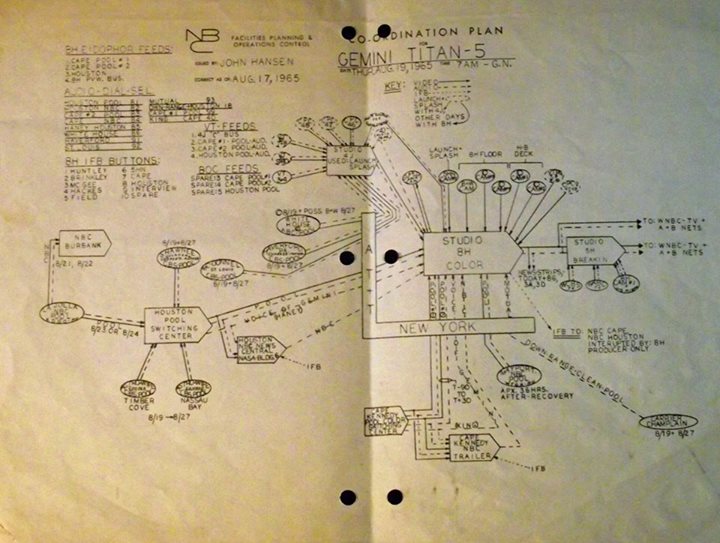
TeleTales #6…NBC’s Gemini 5 Co-ordination Plan, August 1965
Here is a rare mapping of how all the dozens of elements of the multi-day broadcast would lay out. Notice ground zero is Studio 8H and just to the right, we see Studio 5H…the breaking news studio we talked about in the post just before this, which was later renamed 5HN for headline news. Thanks to Gady Reinhold for this treasure! Enjoy and share! -Bobby Ellerbee
TeleTales #5…Ultra Rare Photo of NBC Studio 5HN, Breaking News Desk
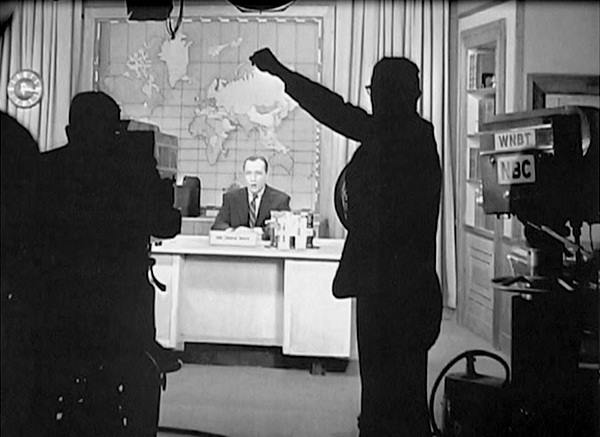
On the day President Kennedy was killed, this was where Chet Huntley, Frank McGee and others broke the news. Then named 5H, this was a permanent news setup studio that could be used if news broke before the evening newscast set could be readied.
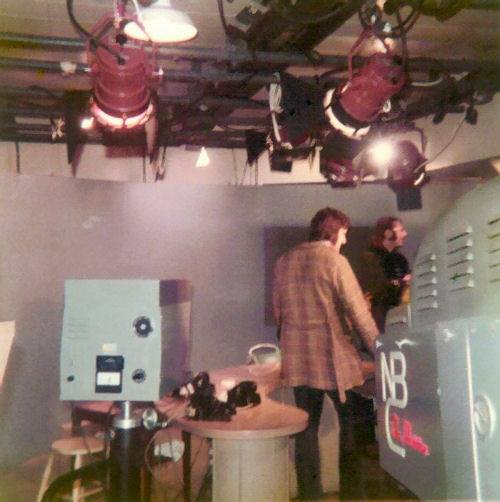
On that day, the cameras were not hot, or always on, but after that day there was always a live camera in 5HN ready to go. This is the only photo I have ever seen of the studio and I think this is from the mid 1970s. By 1969, most of the 30 Rock studios had RCA TK44s, but with plenty of TK41s in storage, they put one to good use here.
Sometime in the late 60s, WNBC began using this studio for it’s five minute overnight local news briefs and continued there until this studio was done away with. Behind one of these walls are windows that look out over 49th Street. In the comment section, you can see the space as it looks today as an editing area. Enjoy and share! -Bobby Ellerbee